
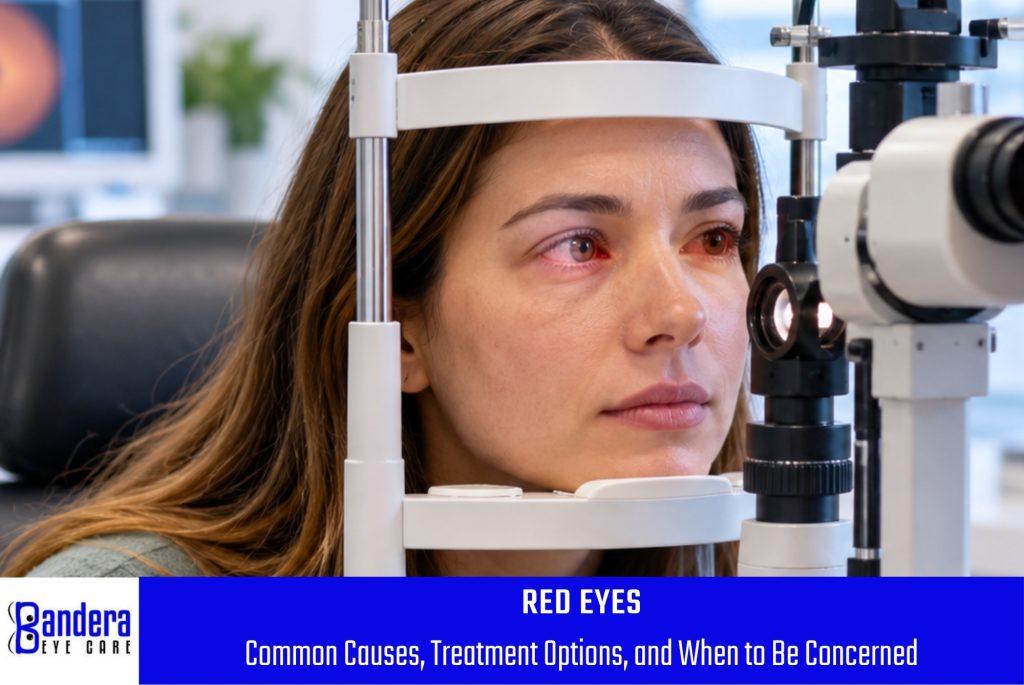
Red eyes are a common reason people seek eye care. Sometimes redness develops after a poor night’s sleep, prolonged screen use, or exposure to environmental irritants. In other cases, it may indicate infection, inflammation, injury, or a potentially serious eye condition.
Although many causes of red eyes are relatively mild, redness accompanied by pain, light sensitivity, or vision changes should never be ignored.
At Bandera Eye Care in Bandera, TX, understanding the possible causes of eye redness can help patients recognize when professional evaluation is appropriate.
Why Do Eyes Become Red?
The white portion of the eye is covered by a thin membrane called the conjunctiva.
When blood vessels on or near the eye’s surface become dilated or inflamed, the eye may appear pink or red.
Redness may affect one eye or both eyes, and the pattern can provide clues about the underlying cause.
What Are the Most Common Causes of Red Eyes?
Dry Eye Disease
An unstable tear film can irritate the ocular surface and cause redness, burning, grittiness, and fluctuating vision.
Allergic Conjunctivitis
Eye allergies commonly cause redness, itching, swelling, and watery discharge.
Both eyes are often affected.
Viral Conjunctivitis
Viral conjunctivitis can produce redness, tearing, irritation, and sometimes swollen lymph nodes near the ears.
Certain viral forms are highly contagious.
Bacterial Conjunctivitis
Bacterial conjunctivitis may cause redness and discharge that can make the eyelids stick together.
However, not every case of conjunctivitis requires antibiotics.
Blepharitis
Inflammation of the eyelid margins can cause crusting, irritation, and redness.
Subconjunctival Hemorrhage
A subconjunctival hemorrhage occurs when a small blood vessel breaks beneath the conjunctiva.
It can create a bright red patch on the white of the eye.
Although many cases are harmless and resolve naturally, recurrent bleeding or associated symptoms may require further assessment.
What Serious Conditions Can Cause Red Eyes?
Keratitis
Keratitis involves inflammation of the cornea and may be caused by infection or injury.
Contact lens wearers are at particular risk for certain infectious complications.
Uveitis
Inflammation inside the eye can cause redness, pain, light sensitivity, and blurry vision.
Acute Angle-Closure Glaucoma
This condition can cause sudden severe eye pain, redness, headache, halos around lights, nausea, and reduced vision.
It is a medical emergency.
Scleritis
Scleritis is inflammation of the deeper outer coat of the eye and may cause significant pain.
It can sometimes be associated with systemic inflammatory disease.
How Can You Tell Whether Red Eyes Are Serious?
Mild Symptoms
Mild redness associated with itching or irritation may result from allergies or dry eye disease.
Concerning Symptoms
Eye pain, light sensitivity, persistent discharge, or worsening symptoms require evaluation.
Emergency Symptoms
Sudden vision loss, severe eye pain, chemical exposure, or significant injury requires immediate medical attention.
How Are Red Eyes Diagnosed?
Symptom and Medical History
The eye doctor may ask about contact lens use, recent illness, allergies, medications, and symptom onset.
Visual Acuity Testing
Checks whether the redness is associated with reduced vision.
Slit-Lamp Examination
Allows detailed examination of the cornea, conjunctiva, and other eye structures.
Diagnostic Staining
Fluorescein dye may help identify corneal abrasions or surface damage.
Eye Pressure Testing
May be appropriate when glaucoma or another pressure-related condition is suspected.
What Treatments Help Red Eyes?
Treatment depends on the underlying cause.
Artificial tears may help dryness. Allergy-specific drops may relieve allergic conjunctivitis. Bacterial infections sometimes require antibiotics, while viral infections often receive supportive care.
Inflammatory eye diseases may require prescription medications and close monitoring.
Using inappropriate drops, particularly unsupervised steroid eye drops, can worsen certain conditions.
What Should You Avoid When Your Eyes Are Red?
Avoid rubbing your eyes, sharing eye makeup, or using another person’s prescription eye drops.
Contact lens wearers should remove their lenses if redness develops and seek prompt assessment, particularly if pain, light sensitivity, or blurred vision is present.
Do not use contact lenses again until it is safe to do so.
Frequently Asked Questions About Red Eyes
Why Is Only One of My Eyes Red?
One-sided redness may result from irritation, a foreign body, infection, injury, or other localized conditions.
Can Dry Eyes Make Your Eyes Red?
Yes. Dry eye disease can cause surface inflammation and visible redness.
Is Every Red Eye Infection Contagious?
No. Allergies, dry eye disease, and many inflammatory conditions are not contagious.
Can Lack of Sleep Cause Red Eyes?
Poor sleep may contribute to dryness and ocular irritation, although persistent redness should not automatically be attributed to fatigue.
Are Redness-Relief Drops Safe?
Some products may temporarily reduce redness, but frequent use of certain vasoconstrictor drops can cause rebound redness.
Can High Blood Pressure Cause Red Eyes?
A subconjunctival hemorrhage may sometimes be associated with hypertension, but ordinary surface redness is not a reliable indicator of blood pressure.
Should I Wear Contacts If My Eyes Are Red?
No. Remove your contacts and seek appropriate guidance, particularly if symptoms are significant.
When Should I Go to the Emergency Room for a Red Eye?
Seek emergency care for severe pain, sudden vision changes, chemical injuries, or redness with severe headache and nausea.
Contact Information
If eye redness persists, worsens, or occurs with other symptoms, Bandera Eye Care can help evaluate possible causes and determine appropriate next steps.
Bandera Eye Care 1136 Main Street Bandera, TX 78003 Phone: (830) 850-0628 Website: banderaeyecare.com