
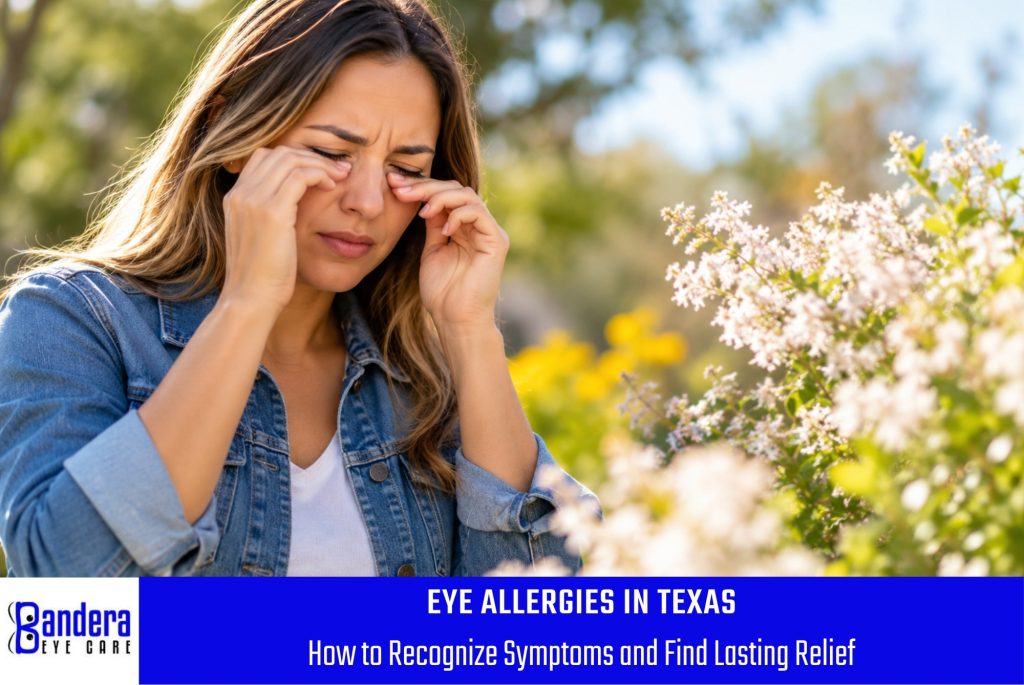
Itchy, red, watery eyes can make it difficult to enjoy everyday activities, especially during periods of high pollen exposure.
In Bandera and the surrounding Texas Hill Country, seasonal grasses, tree pollen, weeds, dust, and other environmental allergens may contribute to recurring eye irritation.
Although eye allergies are common, their symptoms can resemble dry eye disease, infection, and other ocular conditions. Understanding the differences can help patients avoid inappropriate treatments and seek effective relief.
At Bandera Eye Care in Bandera, TX, identifying the cause of persistent eye irritation is an important step toward protecting ocular comfort and health.
What Are Eye Allergies?
Eye allergies, also called allergic conjunctivitis, occur when the immune system reacts to substances that are usually harmless.
These substances, known as allergens, trigger the release of inflammatory chemicals such as histamine.
Histamine contributes to itching, redness, swelling, and tearing.
What Causes Eye Allergies in Texas?
Tree Pollen
Certain trees release airborne pollen that can trigger seasonal allergic symptoms.
Grass and Weed Pollen
Grass and weed pollen may contribute to eye irritation during different times of the year.
Dust and Indoor Allergens
Dust mites, mold, and animal dander can cause symptoms throughout the year.
Wind and Outdoor Exposure
Wind can carry airborne allergens and irritants, increasing exposure during outdoor activities.
What Are the Symptoms of Allergic Conjunctivitis?
Itchy Eyes
Itching is one of the most characteristic symptoms of eye allergies.
Redness and Swelling
Inflammation can make the conjunctiva appear red and cause puffiness around the eyelids.
Excessive Tearing
The eyes may produce additional tears in response to allergic irritation.
Burning and Discomfort
Some patients experience burning or a gritty sensation, particularly when allergies coexist with dry eye disease.
How Can You Tell the Difference Between Eye Allergies and an Eye Infection?
Eye Allergies
Allergies commonly affect both eyes and produce prominent itching, watery discharge, and symptoms associated with allergen exposure.
Viral Conjunctivitis
Viral conjunctivitis often causes redness and watery discharge and may occur alongside respiratory symptoms.
It can spread between people.
Bacterial Conjunctivitis
Bacterial conjunctivitis may produce thicker discharge and eyelids that stick together.
However, discharge characteristics alone cannot reliably determine the cause.
When Symptoms Require Evaluation
Significant pain, light sensitivity, reduced vision, or contact lens-related redness may indicate a more serious condition than ordinary allergies.
What Treatments Help Eye Allergies?
Antihistamine Eye Drops
Ophthalmic antihistamines can reduce itching and other allergic symptoms.
Mast Cell Stabilizers
These medications help reduce the release of inflammatory mediators involved in allergic reactions.
Some products combine antihistamine and mast cell-stabilizing effects.
Artificial Tears
Lubricating drops may help rinse allergens from the ocular surface and relieve associated dryness.
Cold Compresses
Cool compresses can temporarily reduce itching and swelling.
Prescription Treatments
More severe allergic eye disease may require specialized prescription therapy and monitoring.
Steroid eye drops should only be used under professional supervision because of potential complications.
How Can You Reduce Exposure to Eye Allergens?
Monitor Pollen Conditions
Limiting outdoor exposure during periods of high pollen concentration may reduce symptoms.
Avoid Rubbing Your Eyes
Rubbing can worsen inflammation and irritation.
Wash Your Hands and Face
Removing pollen and other allergens after outdoor activities may help.
Keep Indoor Environments Clean
Regular cleaning and appropriate air filtration may reduce indoor allergen exposure.
Manage Contact Lens Use
Some patients find that temporarily switching to glasses improves comfort during allergy flare-ups.
Can Eye Allergies Become Chronic?
Yes. Some patients experience seasonal symptoms, while others develop perennial allergic conjunctivitis.
Persistent symptoms may also involve dry eye disease or eyelid inflammation.
A proper diagnosis helps determine which treatments are appropriate.
Frequently Asked Questions About Eye Allergies
Why Are My Eyes So Itchy in Texas?
Airborne pollen, grasses, dust, and other allergens can trigger allergic conjunctivitis, especially in susceptible individuals.
Can Eye Allergies Cause Blurry Vision?
Tearing and tear-film instability may temporarily blur vision. Persistent reduced vision requires evaluation.
Are Eye Allergies Contagious?
No. Allergic conjunctivitis is not contagious, although infectious conjunctivitis can produce similar symptoms.
Can Allergies Cause Dry Eyes?
Allergic inflammation and some allergy medications may worsen dry eye symptoms.
Should I Use Redness-Relief Eye Drops?
Frequent use of certain redness-relieving drops may cause rebound redness. Allergy-specific or lubricating drops may be more appropriate depending on the diagnosis.
Can Children Develop Eye Allergies?
Yes. Allergic conjunctivitis is common in children and may occur alongside seasonal allergies or eczema.
Are Contact Lenses Safe During Eye Allergy Flare-Ups?
Contact lenses may worsen discomfort. Patients with significant redness or irritation should remove their lenses and seek guidance.
When Should I See an Eye Doctor for Allergies?
Schedule an examination when symptoms persist, repeatedly return, or fail to improve with appropriate over-the-counter care. Pain, light sensitivity, or decreased vision requires prompt assessment.
Contact Information
If itchy, watery, or irritated eyes are affecting your comfort, Bandera Eye Care can help evaluate possible causes and discuss appropriate treatment options.
Bandera Eye Care 1136 Main Street Bandera, TX 78003 Phone: (830) 850-0628 Website: banderaeyecare.com