
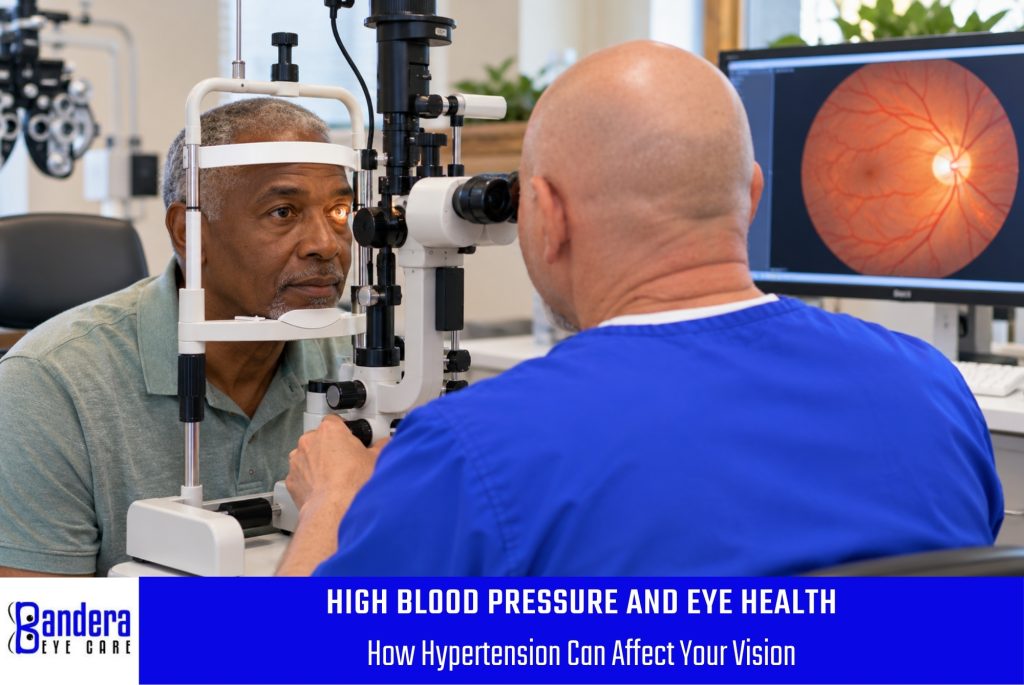
High blood pressure, also known as hypertension, is a common medical condition that can affect blood vessels throughout the body.
While most people associate hypertension with heart disease and stroke, elevated blood pressure can also damage the delicate blood vessels that supply the retina and other eye structures.
These changes may develop without obvious symptoms, making preventive eye care particularly important for people with hypertension.
At Bandera Eye Care in Bandera, TX, understanding how blood pressure affects vision can help patients recognize the importance of coordinated medical and eye care.
How Does High Blood Pressure Affect the Eyes?
The retina requires a healthy blood supply to function properly.
Chronically elevated blood pressure can damage small retinal arteries and alter normal blood flow.
Retinal Blood Vessel Narrowing
Persistent hypertension may cause retinal arteries to narrow.
Blood Vessel Leakage
Damaged retinal vessels can leak blood or fluid into surrounding tissues.
Reduced Retinal Circulation
Severe vascular changes can interfere with oxygen and nutrient delivery to retinal tissue.
What Is Hypertensive Retinopathy?
Hypertensive retinopathy refers to retinal vascular changes associated with elevated blood pressure.
Early Hypertensive Retinopathy
Mild disease may involve narrowing of retinal arteries or changes at artery-vein crossings.
Patients often experience no symptoms.
Moderate Hypertensive Retinopathy
More pronounced disease may cause retinal hemorrhages, cotton-wool spots, or lipid deposits.
Severe Hypertensive Retinopathy
Severe blood pressure elevation may cause extensive retinal abnormalities and optic disc swelling.
These findings can indicate a potentially dangerous systemic condition requiring urgent medical evaluation.
What Are the Symptoms of Hypertension-Related Eye Problems?
Many patients experience no visual symptoms during early disease.
When complications occur, symptoms may include blurry vision, reduced visual clarity, visual field changes, or sudden vision loss.
Sudden visual changes should never be assumed to result from routine blood pressure fluctuations.
Can High Blood Pressure Cause Permanent Vision Loss?
Yes. Severe or prolonged hypertension can contribute to retinal vascular injury and vision-threatening complications.
Retinal Vein Occlusion
Hypertension is an important risk factor for retinal vein occlusion, a condition involving blockage of retinal venous blood flow.
Retinal Artery Occlusion
Retinal artery occlusion causes sudden disruption of blood supply and is considered a medical emergency.
Optic Nerve Damage
Vascular conditions associated with hypertension can contribute to certain optic nerve disorders.
How Are Hypertension-Related Eye Changes Diagnosed?
Dilated Retinal Examination
Allows an eye doctor to examine retinal blood vessels and identify abnormalities.
Retinal Photography
May help document vascular changes and monitor progression.
Optical Coherence Tomography
When indicated, OCT can identify retinal swelling or structural abnormalities.
Blood Pressure and Medical Assessment
A diagnosis and management plan for hypertension require appropriate medical evaluation.
Can Managing Blood Pressure Protect Your Eyes?
Controlling blood pressure is an important part of reducing cardiovascular and ocular vascular risk.
Follow Your Prescribed Treatment Plan
Take medications as directed by your healthcare professional.
Maintain a Heart-Healthy Diet
Dietary approaches that emphasize vegetables, fruits, whole grains, and appropriate sodium intake may support blood pressure management.
Stay Physically Active
Regular activity can support cardiovascular health when appropriate for your medical condition.
Manage Other Risk Factors
Diabetes, smoking, and abnormal cholesterol levels may compound vascular risk.
When Are Vision Changes Related to Blood Pressure an Emergency?
Sudden vision loss, a new visual field defect, or sudden neurological symptoms require immediate emergency assessment.
Blood pressure readings of 180/120 mm Hg or higher, particularly with vision changes, chest pain, shortness of breath, or neurological symptoms, may indicate a hypertensive emergency.
Do not delay emergency care to arrange a routine eye examination.
Frequently Asked Questions About High Blood Pressure and Vision
Can High Blood Pressure Cause Blurry Vision?
Yes. Severe hypertension and retinal vascular complications can cause blurred vision.
Can Hypertension Damage Your Eyes Without Symptoms?
Yes. Early hypertensive retinopathy may develop without noticeable visual changes.
Can High Blood Pressure Cause Blindness?
Severe retinal or optic nerve complications can cause permanent vision loss.
Is Hypertensive Retinopathy Reversible?
Some retinal findings may improve with effective blood pressure control. Advanced damage may not be fully reversible.
Can an Eye Doctor Diagnose Hypertension?
An eye doctor may identify suspicious retinal findings, but hypertension is diagnosed through appropriate blood pressure assessment.
Does Blood Pressure Medication Affect Vision?
Some medications may have visual side effects, but patients should not discontinue prescribed treatment without medical guidance.
How Often Should People With Hypertension Have Eye Exams?
Frequency depends on retinal findings, blood pressure control, other medical conditions, and individual risk factors.
Can High Blood Pressure Cause Sudden Vision Loss?
Yes. Retinal vascular occlusions and other serious complications may cause sudden vision loss requiring emergency evaluation.
Contact Information
If you have hypertension, regular medical care and appropriate eye examinations can help protect your long-term vision.
Bandera Eye Care 1136 Main Street Bandera, TX 78003 Phone: (830) 850-0628 Website: banderaeyecare.com