
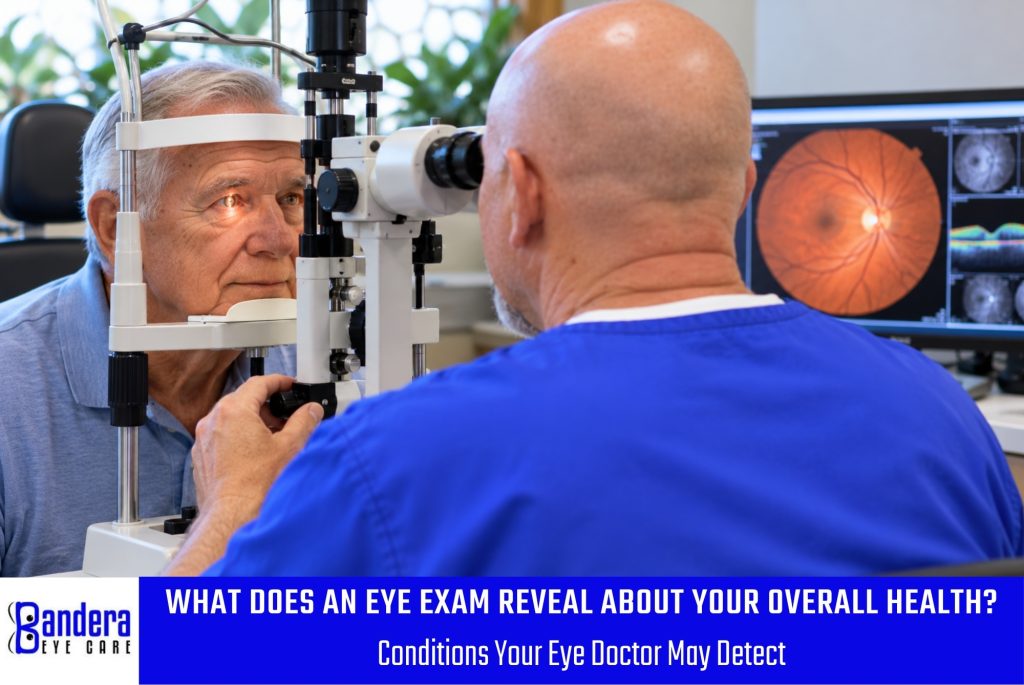
Your eyes do more than allow you to see the world. They also provide valuable information about your overall health.
During a comprehensive eye examination, an eye doctor can observe blood vessels, nerves, and other structures that may reflect changes associated with systemic medical conditions.
In some cases, an eye examination identifies abnormalities before a patient recognizes symptoms elsewhere in the body.
At Bandera Eye Care in Bandera, TX, understanding the connection between eye health and overall wellness can help patients appreciate the importance of preventive examinations.
Why Are the Eyes a Window Into Your Health?
The retina contains a network of small blood vessels that can be examined directly through the pupil.
Changes in these vessels may reflect vascular conditions affecting other parts of the body.
The optic nerve and ocular surface can also reveal findings associated with neurological, autoimmune, and metabolic disorders.
However, an eye examination does not replace appropriate primary care testing or establish every systemic diagnosis.
Can an Eye Exam Detect Signs of Diabetes?
Diabetes can damage small blood vessels in the retina.
Diabetic Retinopathy
An eye doctor may observe microaneurysms, retinal hemorrhages, or other vascular abnormalities.
Diabetic Macular Edema
Fluid leakage into the macula can interfere with detailed central vision.
Why Early Detection Matters
Retinal changes may occur without obvious symptoms.
Identifying abnormalities can prompt appropriate follow-up and coordination with a patient’s diabetes care team.
Can an Eye Exam Reveal High Blood Pressure?
High blood pressure can affect retinal blood vessels.
Hypertensive Retinopathy
Possible findings include narrowing of retinal arteries, changes at vessel crossings, hemorrhages, and retinal swelling.
Severe Hypertension
Certain retinal findings may indicate severe blood pressure elevation and require urgent medical assessment.
Eye findings alone do not establish a diagnosis of hypertension. Blood pressure measurement and medical evaluation remain essential.
What Can an Eye Exam Reveal About Cholesterol and Cardiovascular Health?
Retinal Vascular Changes
Certain retinal findings may be associated with vascular disease and cardiovascular risk factors.
Retinal Cholesterol Emboli
Occasionally, an eye examination identifies an embolus within a retinal blood vessel.
This can indicate a need for prompt cardiovascular or vascular evaluation.
Corneal Arcus
A pale ring around the corneal edge, called corneal arcus, is common with aging.
When present in younger individuals, it may prompt consideration of lipid abnormalities.
Can Autoimmune Diseases Affect Your Eyes?
Yes. Some autoimmune conditions produce ocular symptoms or examination findings.
Sjögren Disease
Sjögren disease can affect tear-producing glands and cause significant dry eye symptoms.
Rheumatoid Arthritis
Rheumatoid arthritis may be associated with dry eye disease, episcleritis, or scleritis.
Lupus and Other Inflammatory Disorders
Certain inflammatory diseases can affect retinal vessels or other ocular structures.
Eye findings may support further medical investigation but are not sufficient to diagnose these conditions independently.
Can Eye Exams Detect Neurological Problems?
Optic Nerve Swelling
Swelling of the optic disc can occur for several reasons, including elevated intracranial pressure.
Abnormal Pupil Responses
Changes in pupil function may suggest certain neurological or ocular disorders.
Visual Field Defects
Specific patterns of visual field loss may indicate problems involving the optic nerve or visual pathways.
Sudden neurological symptoms require emergency evaluation.
What Happens During a Comprehensive Eye Health Examination?
Review of Medical History
The eye doctor may ask about medications, diabetes, blood pressure, family history, and current symptoms.
Visual Acuity and Refraction
These tests evaluate vision clarity and corrective lens requirements.
Slit-Lamp Examination
The front structures of the eyes are examined for abnormalities.
Retinal Examination
The retina, blood vessels, and optic nerve are evaluated. Dilation or additional imaging may be recommended.
Additional Testing or Referral
Suspicious findings may lead to further testing or communication with a primary care physician or specialist.
Why Is Coordinated Healthcare Important?
Eye examinations provide valuable information, but they represent only one component of comprehensive healthcare.
When eye findings suggest a systemic condition, appropriate medical evaluation may include blood pressure measurements, laboratory testing, imaging, or specialist consultation.
Coordinated care can help patients receive timely diagnosis and management.
Frequently Asked Questions About Eye Exams and Overall Health
Can an Eye Doctor Tell If You Have Diabetes?
An eye doctor may identify retinal changes associated with diabetes, but blood testing and medical evaluation are necessary for diagnosis.
Can High Blood Pressure Be Seen in the Eyes?
Yes. Hypertension can produce characteristic retinal vascular changes, although not everyone with hypertension develops visible abnormalities.
Can Eye Exams Detect High Cholesterol?
Certain findings may suggest lipid abnormalities, but blood testing is required to evaluate cholesterol levels.
Can an Eye Exam Detect a Brain Tumor?
Some neurological conditions, including certain brain tumors, may cause optic nerve swelling or visual field abnormalities. An eye examination cannot reliably detect or rule out a brain tumor.
Can Autoimmune Diseases Cause Dry Eyes?
Yes. Sjögren disease and other autoimmune conditions can contribute to ocular surface disease.
Can Eye Doctors Detect Signs of a Stroke?
Certain retinal vascular abnormalities or visual field patterns may raise concern about vascular or neurological disease. Sudden stroke symptoms require immediate emergency care.
Do I Need an Eye Exam If My Primary Care Doctor Says I Am Healthy?
Yes. Eye-specific conditions may develop independently of general medical health.
Should I Tell My Eye Doctor About My Medications?
Yes. Certain medications can affect eye pressure, tear production, retinal health, or other visual functions.
Contact Information
Your eyes are an important part of your overall health. Bandera Eye Care encourages comprehensive examinations as part of an individualized preventive healthcare plan.
Bandera Eye Care 1136 Main Street Bandera, TX 78003 Phone: (830) 850-0628 Website: banderaeyecare.com