
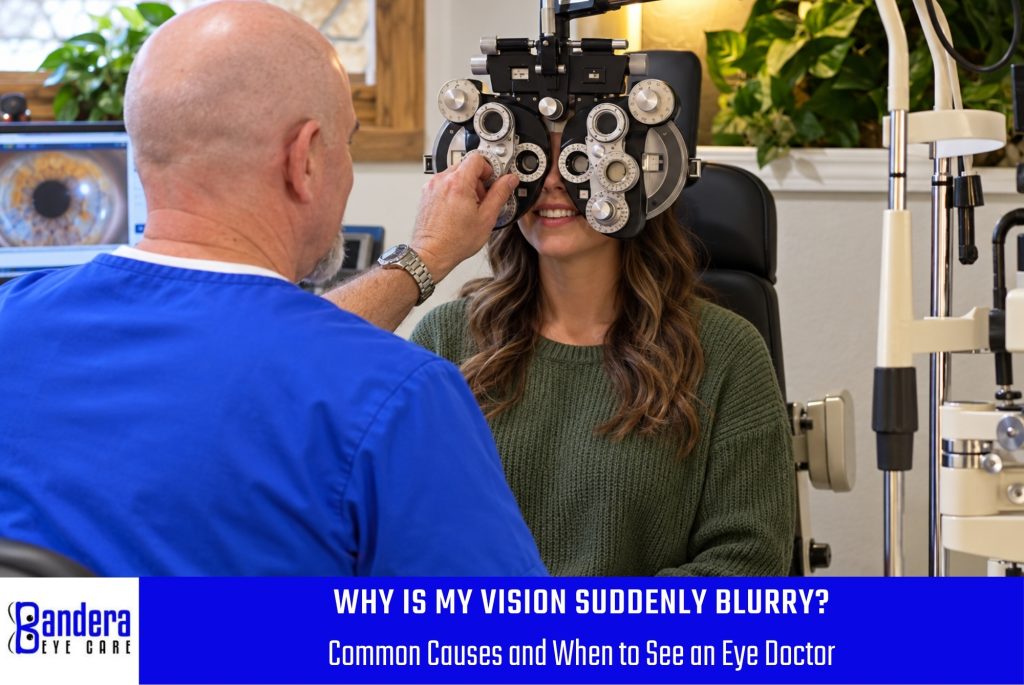
Blurry vision can happen unexpectedly, making everyday activities such as reading, driving, working, or recognizing faces more difficult. Sometimes the cause is relatively simple, such as dry eyes or an outdated glasses prescription. However, sudden blurry vision can also signal a serious eye condition or medical emergency requiring immediate attention.
At Bandera Eye Care in Bandera, TX, we believe understanding changes in your eyesight is an important part of protecting your long-term vision. Knowing what causes blurry vision, recognizing warning signs, and seeking appropriate eye care can help prevent avoidable complications.
What Causes Sudden Blurry Vision?
Blurry vision occurs when light does not focus properly on the retina or when a condition interferes with the eye’s ability to transmit visual information to the brain. The underlying cause may involve the cornea, lens, retina, optic nerve, or other structures.
Refractive Errors and Prescription Changes
Nearsightedness, farsightedness, and astigmatism are common reasons for blurred vision. These conditions affect how light focuses inside the eye.
Symptoms may include difficulty reading distant signs, blurred text, squinting, and headaches. Although refractive changes typically develop gradually, some people notice them suddenly during visually demanding activities.
A comprehensive eye examination can determine whether corrective lenses are appropriate.
Dry Eye Syndrome
Dry eye disease develops when the eyes do not produce enough tears or when the tear film becomes unstable.
Common symptoms include fluctuating blurry vision, burning, grittiness, redness, and excessive watering. Vision may temporarily improve after blinking because blinking redistributes tears across the cornea.
Environmental factors such as wind, low humidity, air conditioning, and extended screen use can aggravate dry eye symptoms.
Cataracts
Cataracts develop when the eye’s natural lens becomes cloudy. Although cataracts generally progress slowly, patients may suddenly recognize changes in their vision.
Common symptoms include cloudy eyesight, glare sensitivity, faded colors, and difficulty driving at night.
Blood Sugar Fluctuations
Changes in blood glucose can temporarily affect the shape and focusing ability of the eye’s lens.
People with diabetes may experience intermittent blurry vision when blood sugar levels fluctuate. Persistent or sudden visual changes can also indicate diabetic retinal disease and should not be dismissed as temporary glucose-related changes.
Eye Infections and Inflammation
Conditions affecting the cornea or internal eye structures can cause blurry vision.
Conjunctivitis may produce discharge and irritation, while keratitis or uveitis can cause significant pain, light sensitivity, and potentially serious vision complications.
Blurred vision accompanied by pain or light sensitivity requires prompt professional evaluation.
Retinal Problems
The retina is the light-sensitive tissue at the back of the eye. Conditions such as retinal detachment, retinal vascular occlusion, and macular disorders can cause sudden changes in vision.
Some retinal emergencies are painless, making sudden visual changes particularly important to investigate.
When Is Sudden Blurry Vision an Emergency?
Sudden unexplained vision loss or significant blurring should be treated as urgent, even without pain.
Seek immediate emergency medical attention for:
- Sudden loss of vision in one or both eyes
- Blurry vision accompanied by facial drooping, weakness, confusion, or difficulty speaking
- A dark curtain or shadow moving across your vision
- Sudden visual changes with severe eye pain, redness, headache, or nausea
- Significant visual changes following an eye injury
These symptoms can indicate retinal detachment, stroke, acute angle-closure glaucoma, or another sight-threatening condition.
Do not wait for a routine appointment if you experience sudden, unexplained vision loss.
How Does an Eye Doctor Diagnose Blurry Vision?
A comprehensive evaluation may include several diagnostic procedures.
Visual Acuity and Refraction Testing
Visual acuity testing measures how clearly you see at different distances. Refraction determines whether glasses or contact lenses can improve vision.
Slit-Lamp Examination
A slit-lamp microscope allows the eye doctor to examine the cornea, iris, lens, and other structures for abnormalities.
Eye Pressure Measurement
Tonometry measures intraocular pressure, an important component of evaluating glaucoma risk.
Dilated Retinal Examination
Dilating drops allow the eye doctor to examine the retina and optic nerve more thoroughly.
Depending on the symptoms and findings, additional retinal imaging or specialist evaluation may be recommended.
Can Blurry Vision Be Treated?
Treatment depends on the underlying diagnosis.
Prescription glasses or contact lenses can correct refractive errors. Dry eye management may involve lubricating drops, environmental modifications, or prescription treatments. Cataracts may eventually require surgery, while retinal disorders and certain inflammatory conditions require more specialized intervention.
The most important step is identifying the cause rather than assuming every episode of blurry vision requires stronger glasses.
How Can You Protect Your Vision?
Routine comprehensive eye examinations help detect conditions that may develop without obvious symptoms.
Additional protective habits include managing diabetes and blood pressure, wearing UV-protective sunglasses, using appropriate eye protection, and taking breaks during prolonged screen use.
People with existing eye diseases or significant medical risk factors may require more frequent examinations.
Frequently Asked Questions About Sudden Blurry Vision
Why Did My Vision Suddenly Become Blurry in One Eye?
Sudden blurry vision in one eye may result from several conditions, including corneal problems, retinal disorders, or reduced blood flow to the eye. Because some causes can permanently affect vision, sudden unexplained changes require immediate evaluation.
Can Stress Cause Blurry Vision?
Stress may contribute to eye strain, headaches, and temporary visual disturbances. However, stress should not be assumed to be the cause of sudden blurry vision without excluding potentially serious medical conditions.
Can Dehydration Cause Blurry Vision?
Dehydration may contribute to dry eye symptoms and an unstable tear film, potentially causing fluctuating vision. Persistent or sudden blurring requires evaluation for other causes.
Is Blurry Vision a Sign of Diabetes?
Blurry vision can occur with fluctuating blood sugar and diabetic eye complications. Anyone experiencing unexplained visual changes, particularly with diabetes, should seek professional evaluation.
Why Does My Vision Get Blurry After Looking at a Computer?
Prolonged screen use can reduce blinking frequency and contribute to dry eyes and focusing fatigue. Taking regular breaks and addressing underlying vision problems may help.
Can Blurry Vision Go Away on Its Own?
Some causes, such as temporary tear-film instability, may improve. However, improvement does not guarantee that a serious condition is absent, particularly when symptoms begin suddenly.
How Often Should I Have My Eyes Examined?
Examination frequency depends on age, eye health, medical history, and risk factors. Your eye doctor can recommend an appropriate schedule based on your individual needs.
Should I Go to the Emergency Room for Sudden Blurry Vision?
Yes, if you experience sudden unexplained vision loss, stroke-like symptoms, severe eye pain, or a curtain-like shadow in your vision. These symptoms warrant immediate emergency assessment.
Contact Information
If you have noticed changes in your eyesight or are due for a comprehensive eye examination, Bandera Eye Care provides a local resource for evaluating your vision and eye health.
Bandera Eye Care 1136 Main Street Bandera, TX 78003 Phone: (830) 850-0628 Website: banderaeyecare.com
CLICK HERE TO BOOK AN APPOINTMENT
For sudden vision loss or other emergency symptoms, seek immediate emergency care rather than booking a routine appointment.