
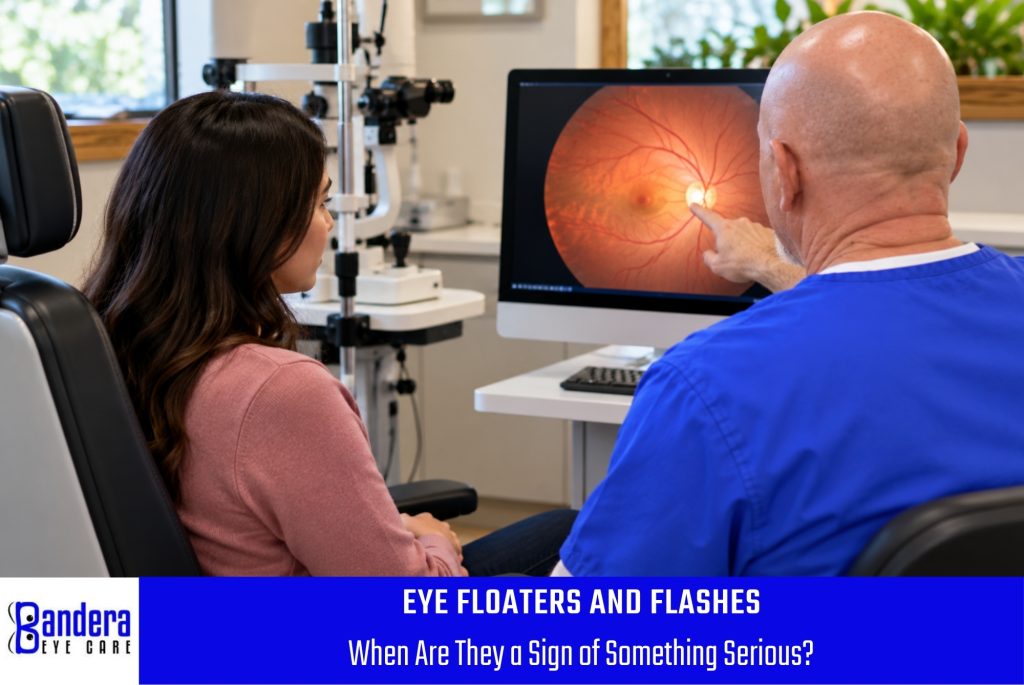
Have you ever noticed small specks, squiggly lines, or cobweb-like shapes drifting across your vision? Perhaps you have experienced brief flashes of light even though no external light source was present. These visual disturbances are commonly called eye floaters and flashes.
Although many floaters develop as part of normal aging, sudden changes can indicate a retinal tear or retinal detachment, both of which require immediate attention.
At Bandera Eye Care in Bandera, TX, educating patients about retinal warning signs is an important part of protecting long-term eye health.
What Are Eye Floaters?
Eye floaters are small shapes that appear to move through your field of vision. They may look like dots, threads, rings, or transparent strands.
Floaters are often most noticeable when looking at bright backgrounds, such as a clear sky, computer screen, or white wall.
What Causes Floaters?
The eye contains a transparent, gel-like substance called the vitreous humor. As people age, the vitreous gradually changes consistency, and microscopic collagen fibers can clump together.
These clumps cast shadows on the retina, creating the appearance of floating objects.
Floaters are generally inside the eye rather than on its surface.
Are Eye Floaters Normal With Aging?
Age-related vitreous changes are common, especially after middle age.
However, the appearance of new floaters should not automatically be attributed to aging. A sudden increase in floaters may indicate bleeding, inflammation, or retinal damage.
What Causes Flashes of Light in Your Vision?
Flashes, sometimes called photopsias, may appear as brief streaks, sparks, or lightning-like patterns.
Vitreous Traction on the Retina
When the vitreous pulls on the retina, it can stimulate retinal cells and produce the sensation of light.
This can occur during posterior vitreous detachment, a common age-related process.
Posterior Vitreous Detachment
Posterior vitreous detachment (PVD) occurs when the vitreous separates from the retina.
Many cases develop without serious complications. However, vitreous separation can sometimes create a retinal tear, especially when the vitreous remains firmly attached to certain retinal areas.
Migraine-Related Visual Disturbances
Migraine aura may produce shimmering lights, zigzag patterns, or temporary blind spots.
Unlike many retinal flashes, migraine visual symptoms often develop gradually and may affect the visual field of both eyes, even when they seem one-sided.
New visual symptoms should not be assumed to be migraine without appropriate evaluation.
When Are Floaters and Flashes Dangerous?
The National Eye Institute identifies sudden new floaters, flashes, and curtain-like shadows as important warning signs of retinal detachment.
Symptoms of a Possible Retinal Tear
A retinal tear may cause a sudden shower of floaters, repeated flashes, or changes in peripheral vision.
Some retinal tears produce few noticeable symptoms, making examination important when new disturbances develop.
Symptoms of Retinal Detachment
Retinal detachment occurs when the retina separates from the underlying tissue that supports it.
Warning signs include a dark curtain across the vision, a growing shadow, sudden peripheral vision loss, or a significant decrease in visual clarity.
Retinal detachment can cause permanent vision loss if treatment is delayed.
Seek immediate emergency eye care if these symptoms occur.
Who Is at Greater Risk for Retinal Problems?
Certain conditions increase the likelihood of retinal tears or detachment.
High Myopia
People with significant nearsightedness may have longer eyes and thinner peripheral retinal tissue, increasing susceptibility to retinal problems.
Previous Eye Surgery
Certain eye surgeries, including cataract surgery, can increase the risk of retinal detachment.
Eye Injuries
Blunt trauma or penetrating injuries can damage retinal tissue and require urgent examination.
Family or Personal History
A previous retinal detachment or family history of the condition can increase risk.
How Are Floaters and Flashes Evaluated?
Dilated Retinal Examination
Dilating drops allow an eye doctor to examine the peripheral retina for tears, bleeding, or detachment.
Retinal Imaging
Depending on the clinical findings, retinal photographs or optical coherence tomography may provide additional information.
Imaging does not necessarily replace a thorough dilated peripheral retinal examination.
Referral for Retinal Treatment
If a retinal tear or detachment is detected, urgent referral to a retinal specialist may be necessary.
Treatment may involve laser procedures, cryotherapy, or surgery, depending on the condition.
Can Eye Floaters Be Treated?
Most uncomplicated floaters do not require treatment and may become less noticeable over time.
In selected cases involving severe, persistent visual interference, a retinal specialist may discuss surgical options. These procedures have potential risks and are not routinely recommended for minor floaters.
Frequently Asked Questions About Floaters and Flashes
Are Eye Floaters a Sign of Blindness?
Most floaters do not cause blindness. However, sudden new floaters can signal retinal conditions that threaten vision if left untreated.
Can Eye Floaters Disappear Naturally?
Floaters may settle out of the central visual axis or become less noticeable as the brain adapts. They do not always disappear completely.
Why Do I See Flashes When My Eyes Are Closed?
Retinal stimulation from vitreous traction can produce flashes even without external light. New flashes require prompt examination.
Can High Blood Pressure Cause Floaters?
High blood pressure can contribute to retinal vascular disease, but typical age-related floaters are usually related to vitreous changes. New symptoms should be evaluated rather than attributed to blood pressure alone.
Are Floaters More Common After Age 50?
Yes. Age-related changes in the vitreous become increasingly common with age.
Can Stress Cause Eye Floaters?
Stress does not directly cause typical vitreous floaters, although it may increase awareness of existing visual disturbances.
Should I Be Concerned About One New Floater?
A newly appearing floater warrants prompt evaluation, particularly if it is accompanied by flashes, shadows, or blurred vision.
Can a Retinal Detachment Be Painless?
Yes. Retinal detachment is frequently painless, making visual symptoms especially important.
Contact Information
If you notice new floaters or flashes, contact an eye care professional promptly. Sudden vision loss or curtain-like shadows require immediate emergency evaluation.
Bandera Eye Care 1136 Main Street Bandera, TX 78003 Phone: (830) 850-0628 Website: banderaeyecare.com