
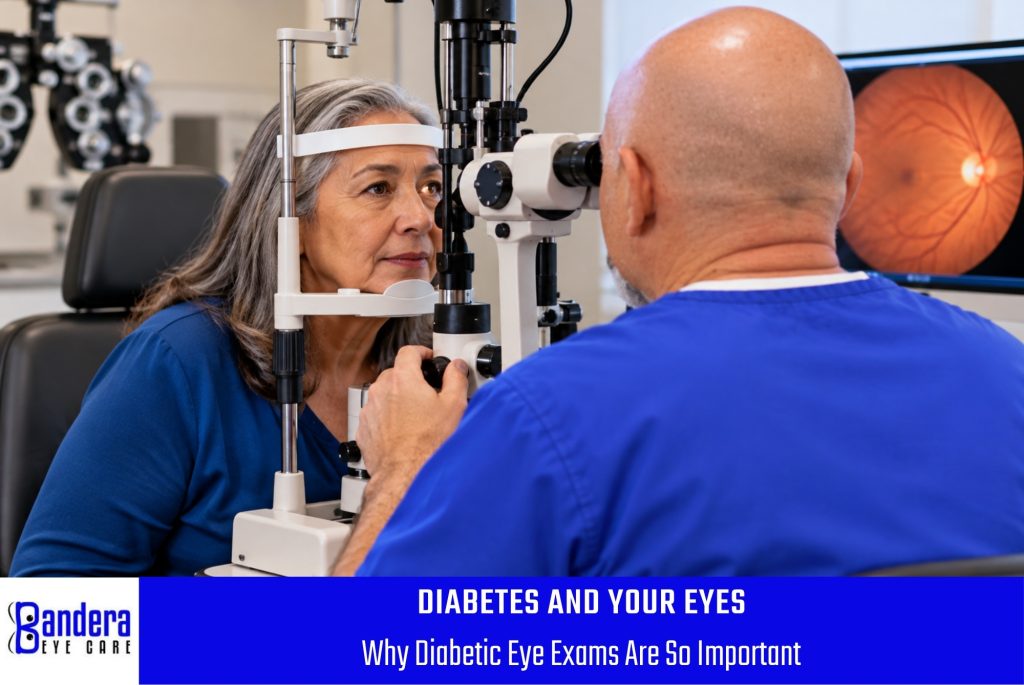
Diabetes affects more than blood sugar. Over time, elevated blood glucose can damage blood vessels and tissues throughout the body, including the delicate structures responsible for vision.
One of the most concerning aspects of diabetic eye disease is that significant retinal damage can develop before a person notices any change in eyesight.
At Bandera Eye Care in Bandera, TX, diabetic eye examinations are an important component of preventive vision care. Understanding how diabetes affects your eyes can help you make informed decisions about regular monitoring and long-term health.
How Does Diabetes Affect Your Eyes?
Diabetes can affect the retina, lens, and other eye structures.
Persistent high blood glucose may damage small retinal blood vessels, causing leakage, swelling, reduced circulation, or abnormal blood vessel growth.
Diabetes also increases the risk of cataracts and glaucoma.
What Is Diabetic Retinopathy?
Diabetic retinopathy is a complication of diabetes involving damage to the blood vessels in the retina.
According to the National Eye Institute, early diabetic retinopathy often produces no noticeable symptoms.
National Eye Institute
Nonproliferative Diabetic Retinopathy
In the earlier stages, retinal blood vessels may develop small bulges, leak fluid, or bleed.
The severity ranges from mild to severe, and vision may remain normal despite measurable retinal changes.
Proliferative Diabetic Retinopathy
Advanced disease can cause abnormal new blood vessels to grow on the retinal surface.
These vessels are fragile and may bleed into the vitreous or produce scar tissue that pulls on the retina.
Potential complications include vitreous hemorrhage, tractional retinal detachment, and severe vision loss.
What Is Diabetic Macular Edema?
The macula is the central portion of the retina responsible for detailed vision.
Diabetic macular edema occurs when fluid accumulates in the macula because damaged blood vessels leak.
Symptoms may include blurry central vision, difficulty reading, or distorted images.
Macular edema can develop at different stages of diabetic retinopathy.
Why Are Annual Diabetic Eye Exams Important?
Diabetic retinal disease may progress without pain or obvious visual symptoms.
A dilated eye examination allows an eye care professional to identify changes that may otherwise go unnoticed.
When Should People With Type 1 Diabetes Have Eye Exams?
For most adults with type 1 diabetes, an initial dilated retinal examination is recommended within five years of diagnosis, followed by examinations according to clinical findings and diabetes care guidelines.
When Should People With Type 2 Diabetes Have Eye Exams?
People diagnosed with type 2 diabetes generally need a dilated eye examination at the time of diagnosis because retinal changes may already be present.
Does Everyone With Diabetes Need an Annual Examination?
Annual examinations are a common recommendation. Some patients with repeatedly normal findings and well-controlled risk factors may qualify for longer intervals under their clinician’s guidance, while patients with retinal disease may need more frequent monitoring.
Pregnancy can require additional retinal surveillance in people with preexisting diabetes.
What Happens During a Diabetic Eye Examination?
Review of Medical History
The eye doctor may discuss diabetes duration, blood sugar management, medications, blood pressure, and previous eye findings.
Dilated Retinal Examination
Dilating drops allow the retina and optic nerve to be examined for hemorrhages, vascular abnormalities, and other signs of disease.
Optical Coherence Tomography
Optical coherence tomography (OCT), when indicated and available, can identify retinal swelling and structural changes.
Retinal Photography
Retinal photographs may help document abnormalities and monitor changes over time.
The specific tests performed depend on clinical needs and available equipment.
Can Diabetic Eye Disease Be Prevented?
Not every case is preventable, but effective diabetes management can substantially reduce risk.
Maintain Appropriate Blood Glucose Levels
Following an individualized diabetes management plan helps reduce the likelihood of microvascular complications.
Manage Blood Pressure and Cholesterol
High blood pressure and abnormal lipid levels can contribute to vascular damage.
Avoid Tobacco Use
Smoking increases cardiovascular risk and may worsen overall vascular health.
Keep Regular Medical Appointments
Coordinated care among eye doctors, primary care clinicians, and diabetes specialists supports comprehensive management.
How Is Diabetic Retinopathy Treated?
Early disease may require careful monitoring and improved systemic risk-factor control.
More advanced disease may require anti-VEGF injections, retinal laser treatment, or surgery performed by an appropriate specialist.
Treatment aims to preserve existing vision and reduce the risk of additional damage.
Frequently Asked Questions About Diabetes and Eye Health
Can Diabetes Cause Blindness?
Yes. Advanced diabetic retinal disease can cause severe vision loss or blindness. Early detection and treatment can significantly reduce this risk.
Can I Have Diabetic Retinopathy With Perfect Vision?
Yes. Retinal changes may develop before visual symptoms become noticeable.
Is a Regular Glasses Exam the Same as a Diabetic Eye Exam?
Not necessarily. A diabetic retinal evaluation includes assessment of the retina, generally with dilation or other clinically appropriate retinal examination methods.
Can High Blood Sugar Temporarily Blur My Vision?
Yes. Blood glucose fluctuations can change the lens’s focusing characteristics and temporarily affect vision.
Does Prediabetes Affect Eye Health?
Prediabetes is associated with metabolic and vascular risk factors. Although classic diabetic retinopathy is more strongly associated with diabetes, appropriate medical monitoring remains important.
Can Diabetic Retinopathy Be Reversed?
Some early retinal abnormalities may improve with effective management. Advanced retinal damage and vision loss may not be fully reversible.
Do People With Well-Controlled Diabetes Still Need Eye Exams?
Yes. Good glucose control reduces risk but does not eliminate the need for retinal monitoring.
What Eye Symptoms Require Immediate Attention?
Sudden vision loss, a shower of new floaters, a dark curtain across vision, or significant new visual changes require urgent evaluation.
Contact Information
Protecting your eyesight is an important part of managing diabetes. Bandera Eye Care encourages patients with diabetes to maintain an individualized schedule of comprehensive eye examinations.
Bandera Eye Care 1136 Main Street Bandera, TX 78003 Phone: (830) 850-0628 Website: banderaeyecare.com