
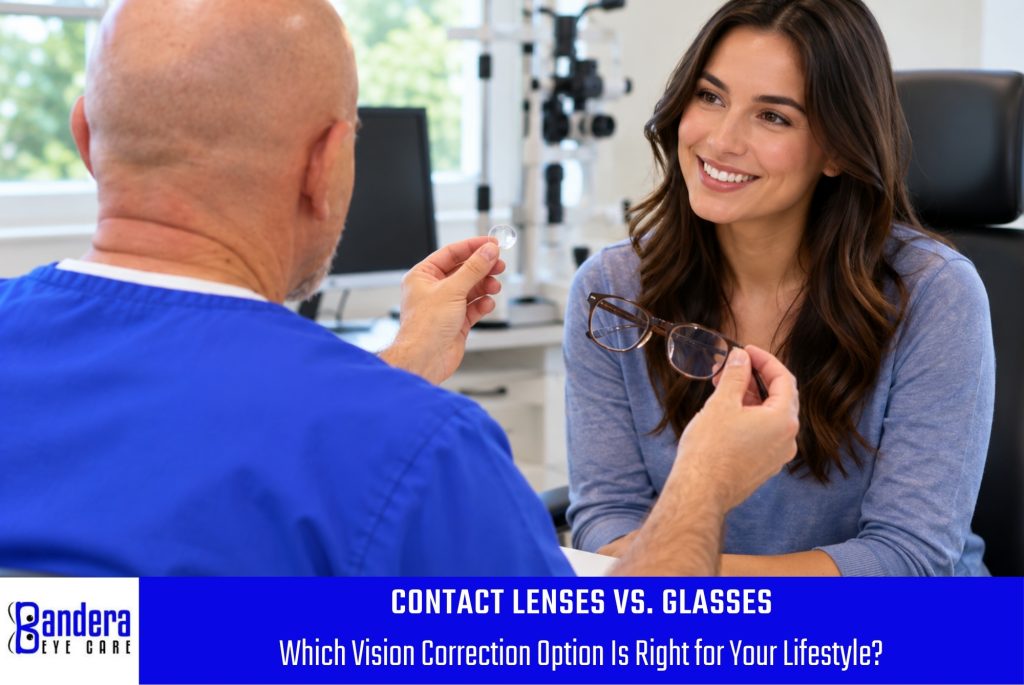
Choosing between contact lenses and eyeglasses involves more than appearance. Comfort, convenience, eye health, daily activities, and prescription requirements all influence which option may work best.
Some people prefer the simplicity of glasses, while others appreciate the freedom that contact lenses provide during sports, exercise, and other activities. Many patients benefit from having both options available.
At Bandera Eye Care in Bandera, TX, understanding the differences between glasses and contact lenses can help you make informed decisions about your vision correction needs.
What Is the Difference Between Contact Lenses and Glasses?
Both glasses and contact lenses correct refractive errors by changing how light enters the eye.
How Eyeglasses Correct Vision
Prescription eyeglasses use lenses positioned in front of the eyes to correct nearsightedness, farsightedness, astigmatism, and presbyopia.
Glasses do not directly touch the eye, making them a practical option for many patients.
How Contact Lenses Correct Vision
Contact lenses rest on the tear film covering the cornea.
Because they move with the eyes, contact lenses provide a different visual experience from eyeglasses and generally allow a wider unobstructed field of view.
What Are the Benefits of Wearing Glasses?
Convenience and Easy Maintenance
Glasses are relatively simple to use and maintain. They do not require direct handling of the eye or specialized disinfecting solutions.
Lower Risk of Contact Lens-Related Infection
Because glasses do not rest on the cornea, they do not carry the same infection risks associated with contact lens wear.
Multiple Lens Options
Modern eyeglasses can incorporate progressive lenses, anti-reflective coatings, photochromic technology, and specialized occupational prescriptions.
A Practical Choice for Dry Eyes
People with dry eye disease may find glasses more comfortable than contact lenses, particularly during symptom flare-ups.
What Are the Benefits of Contact Lenses?
Wider Peripheral Vision
Contact lenses generally provide a wider field of vision without the obstruction of eyeglass frames.
Convenience During Physical Activity
Contacts may be useful during exercise, outdoor recreation, and certain sports.
Appropriate protective eyewear is still necessary for activities that present an eye injury risk.
Freedom From Fogging
Unlike glasses, contact lenses do not fog when moving between different temperatures.
Specialized Vision Correction
Toric, multifocal, rigid gas-permeable, and scleral contact lenses may address different vision needs.
What Are the Disadvantages of Contact Lenses?
Contact lenses require proper hygiene, appropriate replacement schedules, and regular professional monitoring.
Eye Infection Risk
Improper contact lens use can increase the risk of microbial keratitis, a potentially serious corneal infection.
Sleeping in lenses not specifically approved for overnight wear, exposing lenses to water, and poor cleaning habits can increase complications.
Dryness and Irritation
Contact lenses can worsen dryness in some patients.
Ongoing Expenses
Depending on the lens type, contact lenses may require regular replacement and additional care products.
Are Daily Disposable Contact Lenses Better Than Monthly Lenses?
Neither option is automatically best for every patient.
Daily Disposable Lenses
Daily disposables are designed to be discarded after one day of use.
They eliminate the need for overnight storage and routine cleaning, which can simplify lens care.
Reusable Contact Lenses
Reusable lenses may be appropriate for patients who consistently follow cleaning, storage, and replacement instructions.
Lens selection depends on eye health, prescription, comfort, and lifestyle.
Can People With Astigmatism or Presbyopia Wear Contact Lenses?
Yes. Modern contact lens designs can correct many complex prescriptions.
Toric Contact Lenses
Toric lenses are designed to correct regular astigmatism.
Multifocal Contact Lenses
Multifocal lenses may help patients who need correction for both distance and near vision.
Specialty Contact Lenses
Patients with irregular corneas or certain ocular surface conditions may require specialty lenses.
Why Is a Contact Lens Fitting Important?
A contact lens prescription is not identical to an eyeglass prescription.
A professional fitting evaluates lens curvature, diameter, movement, vision quality, and compatibility with the eye’s surface.
Proper fitting helps reduce discomfort and complications.
Frequently Asked Questions About Contact Lenses and Glasses
Are Contact Lenses Better Than Glasses?
Neither is universally better. The best option depends on your eye health, prescription, lifestyle, and preferences.
Can Contact Lenses Damage Your Eyes?
Improper use can cause corneal injury, infection, or inflammation. Correct fitting and care substantially reduce these risks.
Can I Sleep in Contact Lenses?
Sleeping in contact lenses increases infection risk, even with lenses approved for overnight wear. Follow your eye doctor’s specific instructions.
Can I Shower or Swim While Wearing Contacts?
Water exposure should be avoided because it can introduce harmful microorganisms, including Acanthamoeba.
Are Daily Contacts Healthier?
Daily disposables reduce certain hygiene-related risks because they are discarded after use, but safe handling remains essential.
Can I Wear Contacts If I Have Dry Eyes?
Some patients with mild dry eye can wear contact lenses successfully. Others may require treatment or a different lens design.
Do Contact Lenses Work for Bifocal Prescriptions?
Multifocal contact lenses and monovision may provide alternatives to bifocal or progressive glasses.
Should I Own Glasses Even If I Wear Contacts?
Yes. Backup prescription glasses are important when contact lenses become uncomfortable or must be removed.
Contact Information
Whether you prefer glasses, contact lenses, or a combination of both, Bandera Eye Care can help you explore vision correction options appropriate for your needs.
Bandera Eye Care 1136 Main Street Bandera, TX 78003 Phone: (830) 850-0628 Website: banderaeyecare.com