
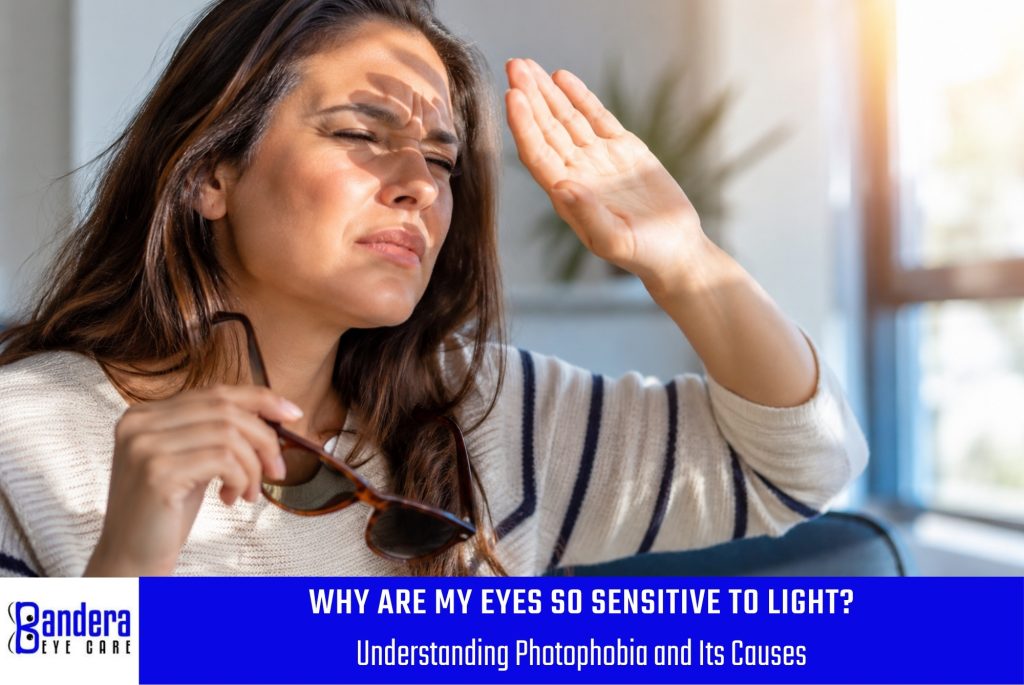
Do bright lights make you squint, cause discomfort, or trigger headaches? Does stepping outdoors on a sunny day feel unusually uncomfortable, even when other people seem unaffected?
Light sensitivity, medically known as photophobia, is a symptom that can develop for several reasons. Sometimes it is associated with relatively common conditions such as dry eyes or migraines. In other cases, it may indicate inflammation, corneal damage, or a more serious medical problem.
At Bandera Eye Care in Bandera, TX, understanding the causes of light sensitivity can help patients recognize when professional evaluation is necessary.
What Is Photophobia?
Photophobia describes abnormal discomfort or pain caused by exposure to light.
Despite its name, photophobia is not a psychological fear of light. It is a physical symptom involving the eyes, nervous system, or both.
Mild Versus Severe Light Sensitivity
Mild photophobia may cause squinting or discomfort in bright sunlight.
Severe photophobia may make ordinary indoor lighting painful or difficult to tolerate.
The severity and associated symptoms can provide important clues about the underlying cause.
What Causes Sensitivity to Light?
Dry Eye Disease
An unstable tear film can expose the corneal surface to irritation.
Patients may experience burning, blurry vision, redness, and increased sensitivity to light.
Migraine
Photophobia is a common migraine symptom and may occur before, during, or after a headache.
Some patients experience migraine-related light sensitivity even without significant headache pain.
Corneal Abrasions
A scratch on the cornea can cause intense pain, tearing, foreign-body sensation, and light sensitivity.
Corneal injuries require prompt assessment, particularly among contact lens wearers.
Uveitis
Uveitis involves inflammation inside the eye.
Symptoms may include pain, redness, blurry vision, and pronounced photophobia.
Untreated inflammation can threaten vision.
Keratitis
Keratitis is inflammation of the cornea and may result from infection, injury, or other causes.
Infectious keratitis can progress rapidly and requires urgent treatment.
Certain Medications
Some medications can increase light sensitivity or affect the eye’s response to illumination.
Patients should discuss suspected medication-related symptoms with their prescribing clinician.
Can Light Sensitivity Be a Sign of Something Serious?
Yes. Although mild sensitivity may result from common conditions, sudden or severe photophobia can indicate an urgent problem.
Warning Signs That Require Prompt Evaluation
Significant eye pain, reduced vision, marked redness, or new light sensitivity after an eye injury should be evaluated urgently.
Neurological Warning Signs
Photophobia accompanied by fever, severe headache, neck stiffness, confusion, or neurological symptoms requires emergency medical attention.
These combinations may indicate conditions that extend beyond the eyes.
How Is Photophobia Diagnosed?
Medical and Symptom History
An eye doctor may ask when symptoms began, whether one or both eyes are affected, and whether headaches or other symptoms are present.
Corneal Examination
A slit-lamp examination and diagnostic staining may identify corneal injuries or inflammation.
Pupil and Eye Health Assessment
Pupil responses and internal eye structures may be evaluated to identify abnormalities.
Additional Medical Evaluation
If an ocular cause is not identified, medical or neurological assessment may be appropriate.
How Is Light Sensitivity Treated?
Treatment depends on the diagnosis.
Dry eye management may improve symptoms related to ocular surface irritation. Corneal infections require targeted medical treatment. Uveitis may require prescription anti-inflammatory therapy under professional supervision.
Migraine-related photophobia may improve with appropriate migraine management.
Can Sunglasses Help With Photophobia?
UV-protective sunglasses and brimmed hats can reduce discomfort outdoors.
However, continuously wearing very dark sunglasses indoors may increase sensitivity to ordinary lighting in some patients.
The goal is to address the underlying condition while using appropriate environmental adjustments.
Frequently Asked Questions About Photophobia
Why Are My Eyes Suddenly Sensitive to Light?
Sudden photophobia may result from corneal injury, inflammation, migraine, or other conditions. New symptoms accompanied by pain or visual changes require prompt evaluation.
Can Dry Eyes Cause Light Sensitivity?
Yes. Dry eye disease can irritate the corneal surface and increase sensitivity to bright light.
Can Migraines Cause Photophobia Without a Headache?
Yes. Some migraine episodes produce visual or sensory symptoms without a prominent headache.
Is Light Sensitivity a Sign of Cataracts?
Cataracts can increase glare and discomfort in bright environments, although true painful photophobia may suggest another condition.
Can Contact Lenses Cause Photophobia?
Yes. Poorly fitting lenses, corneal irritation, and contact lens-related infections can cause light sensitivity.
Does Photophobia Mean I Have an Eye Disease?
Not necessarily. Photophobia is a symptom rather than a diagnosis and can have ocular or neurological causes.
Can Blue Light Glasses Treat Photophobia?
Blue light-blocking glasses are not an established treatment for all forms of photophobia. Certain therapeutic tints may help selected patients, depending on the cause.
When Is Light Sensitivity an Emergency?
Seek emergency care for severe photophobia with significant eye pain, vision loss, fever, severe headache, neck stiffness, or neurological symptoms.
Contact Information
If light sensitivity is interfering with your daily activities, Bandera Eye Care can help assess potential eye-related causes and determine whether additional evaluation is needed.
Bandera Eye Care 1136 Main Street Bandera, TX 78003 Phone: (830) 850-0628 Website: banderaeyecare.com
CLICK HERE TO BOOK AN APPOINTMENT
For sudden severe symptoms, seek urgent medical care rather than waiting for a routine appointment.