
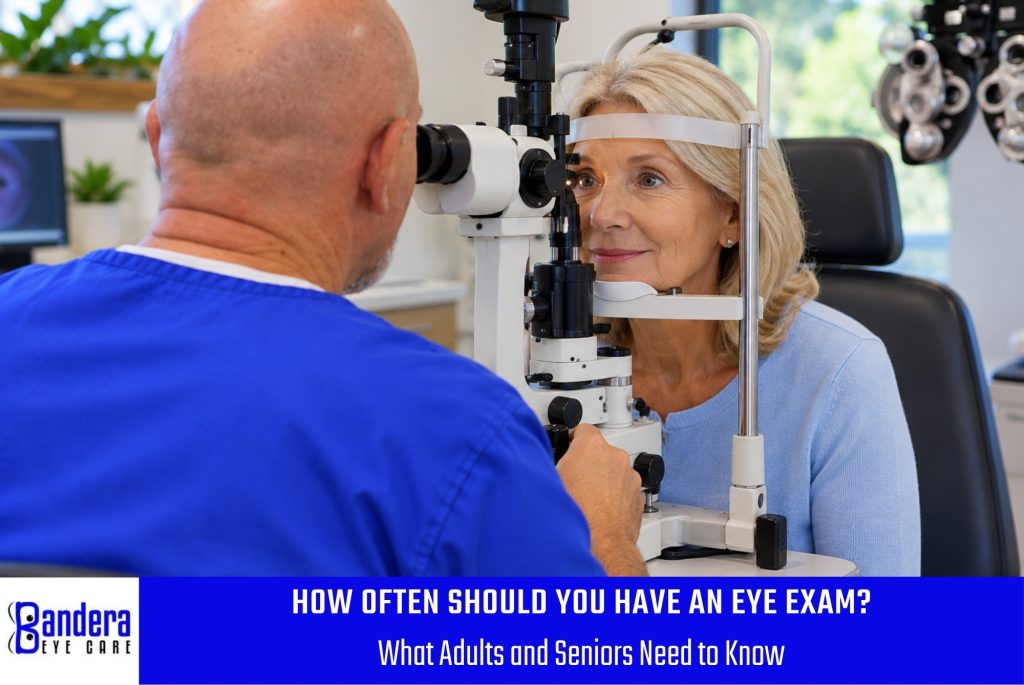
When was your last comprehensive eye examination? If you only visit an eye doctor when your vision becomes blurry or your glasses need updating, you may be overlooking an important part of preventive healthcare.
Many eye diseases develop gradually without causing noticeable symptoms. Glaucoma, diabetic retinopathy, and certain retinal conditions can affect eye health before patients recognize changes in their eyesight.
At Bandera Eye Care in Bandera, TX, understanding the importance of routine eye examinations can help adults and seniors make informed decisions about protecting their vision throughout life.
Why Are Regular Eye Exams Important?
A comprehensive eye examination evaluates more than how clearly you can read an eye chart. It also helps assess the health of the structures responsible for vision.
Detecting Eye Diseases Early
Some eye diseases can cause irreversible damage before symptoms become noticeable. Regular examinations provide opportunities to identify abnormalities and determine whether additional monitoring or treatment is needed.
Monitoring Prescription Changes
Nearsightedness, farsightedness, astigmatism, and presbyopia can affect visual clarity and comfort.
An updated prescription may improve reading, driving, computer use, and other daily activities.
Evaluating Overall Eye Health
Eye examinations can identify changes involving the cornea, lens, retina, optic nerve, and blood vessels.
Certain findings may also suggest the need for evaluation of systemic medical conditions.
How Often Should Adults Have an Eye Exam?
Eye examination frequency depends on age, medical history, symptoms, family history, and individual risk factors.
Adults Ages 18 to 39
Healthy adults without symptoms or significant risk factors may not need comprehensive examinations every year.
The American Academy of Ophthalmology recommends a baseline comprehensive eye examination by age 40 for adults without known eye disease, while optometric recommendations may support more frequent routine examinations.
People who wear contact lenses, have visual symptoms, or possess additional risk factors may need more frequent appointments.
Adults Ages 40 to 64
Eye examinations become increasingly important during middle age because the risk of glaucoma, cataracts, and other age-related conditions increases.
Adults should establish an individualized examination schedule based on their health and examination findings.
Adults Ages 65 and Older
The American Academy of Ophthalmology generally recommends comprehensive eye examinations every one to two years for adults age 65 and older, even without symptoms.
Some patients require more frequent monitoring.
Who Needs More Frequent Eye Examinations?
People With Diabetes
Diabetes can damage retinal blood vessels before visual symptoms appear.
Many adults with diabetes require annual dilated retinal examinations, although the interval may vary according to diabetes type, retinal findings, and clinical recommendations.
People With a Family History of Glaucoma
A family history of glaucoma increases the risk of developing the condition.
Contact Lens Wearers
Contact lens wearers generally need regular examinations to evaluate lens fit, corneal health, and prescription accuracy.
People With Existing Eye Diseases
Patients with glaucoma, macular degeneration, retinal disorders, or other diagnosed conditions may need appointments several times per year.
What Happens During a Comprehensive Eye Exam?
Visual Acuity Testing
Measures how clearly you see at different distances.
Refraction
Determines whether corrective lenses can improve your vision.
Eye Pressure Measurement
Evaluates intraocular pressure, an important factor in glaucoma assessment.
Slit-Lamp Examination
Allows detailed evaluation of the front structures of the eye.
Retinal and Optic Nerve Examination
Helps identify abnormalities involving the retina, blood vessels, and optic nerve. Dilation may be recommended depending on the clinical situation.
What Are Signs You Should Schedule an Eye Exam Sooner?
Do not wait for your next routine examination if you experience persistent blurry vision, frequent headaches during visual tasks, difficulty driving at night, double vision, or new visual discomfort.
Sudden vision loss, a dark curtain across your vision, severe eye pain, or sudden neurological symptoms require emergency medical evaluation.
Frequently Asked Questions About Eye Exam Frequency
Do I Need an Eye Exam Every Year?
Not everyone needs an annual comprehensive examination. The appropriate schedule depends on age, medical history, symptoms, and risk factors.
Should I Have an Eye Exam Even If My Vision Is Perfect?
Yes. Certain eye diseases develop without initially affecting visual clarity.
How Often Should Seniors Have Their Eyes Checked?
Adults age 65 and older are generally advised to have comprehensive examinations every one to two years, or more frequently when medically indicated.
Is a Vision Screening the Same as an Eye Exam?
No. A screening primarily identifies potential vision problems, while a comprehensive examination evaluates visual function and eye health in greater detail.
Can an Eye Exam Detect Glaucoma?
Yes. Comprehensive examinations can identify findings suspicious for glaucoma and determine whether additional testing is necessary.
Do I Need an Eye Exam If I Only Use Reading Glasses?
Yes. Reading glasses address near focusing but do not assess the health of your eyes.
How Long Does a Comprehensive Eye Exam Take?
The duration varies according to the testing performed, medical history, and whether dilation or additional evaluation is needed.
Can Eye Exams Detect Health Problems Beyond the Eyes?
Eye examinations may reveal findings associated with diabetes, hypertension, and certain other systemic conditions. These findings may require additional medical evaluation.
Contact Information
Regular eye examinations are an important investment in lifelong vision health. Contact Bandera Eye Care to discuss an appropriate examination schedule based on your individual needs.
Bandera Eye Care 1136 Main Street Bandera, TX 78003 Phone: (830) 850-0628 Website: banderaeyecare.com