
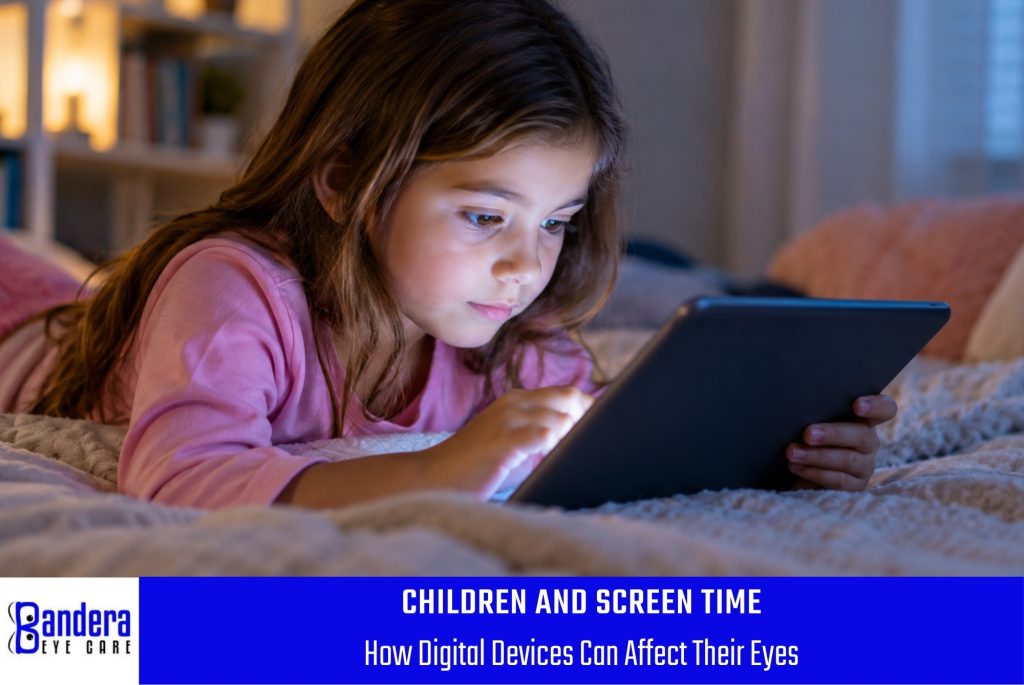
Smartphones, tablets, computers, and gaming devices have become part of everyday childhood. Children use screens for school assignments, entertainment, communication, and creative activities.
Although digital technology offers educational and social benefits, extended screen use can contribute to eye discomfort, reduced blinking, and prolonged near-focusing demands.
Parents may also wonder whether screen time contributes to nearsightedness or causes permanent eye damage.
At Bandera Eye Care in Bandera, TX, understanding the relationship between digital devices and children’s vision can help families develop healthier screen habits.
How Does Screen Time Affect Children’s Eyes?
Digital screens require sustained near focusing, visual attention, and coordination between both eyes.
Children may spend long periods concentrating on devices without taking breaks.
Digital Eye Strain
Digital eye strain can cause temporary symptoms such as blurry vision, headaches, tired eyes, and difficulty maintaining comfortable focus.
Reduced Blinking
Children, like adults, may blink less frequently when concentrating on screens.
Reduced blinking can contribute to dry eyes, burning, irritation, and intermittent blurry vision.
Prolonged Near Work
Extended periods of reading, gaming, or using digital devices increase the amount of time children spend focusing at close distances.
Research has identified associations between extensive near work, reduced outdoor time, and childhood myopia.
Can Too Much Screen Time Cause Nearsightedness?
Nearsightedness, or myopia, occurs when distant objects appear blurry because light focuses in front of the retina.
Myopia commonly develops during childhood and may progress as the eyes grow.
Screen Time and Myopia Risk
Research suggests that greater amounts of near work and less time outdoors are associated with increased myopia risk.
However, screen use is not the only factor. Genetics, environmental conditions, and overall visual habits also influence myopia development.
Why Outdoor Time Matters
Time spent outdoors is associated with a lower risk of developing childhood myopia.
Natural light exposure and opportunities to look at distant objects may contribute to this protective effect.
The American Academy of Ophthalmology emphasizes the relationship between outdoor activity, near work, and myopia development while noting that ordinary screen use has not been shown to directly damage children’s retinas.
What Are Signs of Digital Eye Strain in Children?
Children may not recognize or clearly describe visual discomfort.
Parents should watch for recurring headaches, eye rubbing, excessive blinking, squinting, complaints of blurry vision, and difficulty concentrating during reading or screen activities.
Some children may hold devices unusually close to their faces or frequently change viewing positions.
These behaviors do not automatically indicate eye disease, but persistent symptoms deserve evaluation.
How Much Screen Time Is Appropriate for Children?
Screen recommendations depend on age, developmental needs, content quality, and whether device use interferes with sleep, exercise, learning, or family interaction.
Infants and Toddlers
For very young children, real-world interaction, physical activity, and caregiver engagement are particularly important.
The American Academy of Pediatrics generally recommends very limited screen exposure during infancy, with exceptions such as video communication.
Preschool-Age Children
Screen use should emphasize age-appropriate, high-quality content and caregiver participation.
School-Age Children and Teenagers
Rather than relying exclusively on one universal daily limit, families should establish consistent boundaries that protect sleep, physical activity, school responsibilities, and in-person interaction.
How Can Parents Reduce Digital Eye Strain?
Encourage the 20-20-20 Rule
Every 20 minutes, encourage children to look approximately 20 feet away for at least 20 seconds.
Promote Outdoor Activities
Regular outdoor play provides opportunities for physical activity and may help reduce the risk of developing myopia.
Maintain Comfortable Viewing Distances
Encourage children to avoid holding phones or tablets excessively close to their faces.
Larger screens positioned at comfortable distances may be preferable for extended schoolwork.
Adjust Lighting and Screen Brightness
Reduce glare and avoid using very bright screens in dark rooms.
Encourage Regular Blinking
Remind children to blink normally during extended screen activities.
Protect Sleep
Establish device-free routines before bedtime and avoid allowing recreational screen use to interfere with adequate sleep.
Do Children Need Blue Light Glasses?
Blue light-blocking glasses are widely marketed for digital eye protection.
However, current evidence does not demonstrate that ordinary digital screen exposure causes retinal damage or that blue light-blocking glasses are necessary to prevent digital eye strain.
Prescription lenses may be appropriate when a child has an underlying refractive or binocular vision problem.
Why Are Children’s Eye Exams Important?
Vision plays an important role in reading, classroom participation, sports, and everyday development.
Some children do not recognize that their vision differs from that of others.
Detecting Refractive Errors
Eye examinations can identify nearsightedness, farsightedness, and astigmatism.
Evaluating Eye Coordination
An eye doctor can assess how well the eyes work together during reading and other visual activities.
Monitoring Myopia Progression
Children with progressive nearsightedness may benefit from discussion of evidence-based myopia management options.
Identifying Other Eye Conditions
Comprehensive examinations can identify conditions that may not be detected through basic vision screening alone.
Frequently Asked Questions About Children and Screen Time
Can Too Much Screen Time Permanently Damage My Child’s Eyes?
Ordinary screen use has not been shown to directly cause permanent retinal damage. However, prolonged use can cause temporary eye strain, and extensive near work is associated with myopia risk.
Can Tablets Cause Nearsightedness?
Tablet use may contribute to prolonged near-work exposure, one of several environmental factors associated with myopia development.
Why Does My Child Blink So Much While Gaming?
Frequent blinking may reflect dryness, irritation, visual fatigue, or other conditions. Persistent excessive blinking should be evaluated.
Can Screen Time Cause Headaches in Children?
Yes. Extended near work, uncorrected vision problems, and eye coordination difficulties can contribute to headaches.
Should Children Wear Blue Light Glasses?
Special blue light glasses are generally not necessary for routine screen use. Prescription lenses should be based on individual visual needs.
Does Outdoor Play Help Protect Children’s Vision?
Research suggests that spending more time outdoors can reduce the risk of developing myopia.
Can Screen Time Cause Lazy Eye?
Screen time itself is not an established direct cause of amblyopia. Amblyopia usually develops because of conditions such as unequal refractive errors, eye misalignment, or visual deprivation during childhood.
When Should My Child Have an Eye Examination?
Children should receive age-appropriate vision screening and comprehensive eye examinations when indicated by symptoms, screening results, medical history, or risk factors. Your eye doctor can recommend an individualized schedule.
Contact Information
If your child experiences headaches, blurry vision, eye rubbing, or difficulty concentrating during visual activities, Bandera Eye Care can help assess potential vision-related concerns.
Bandera Eye Care 1136 Main Street Bandera, TX 78003 Phone: (830) 850-0628 Website: banderaeyecare.com