
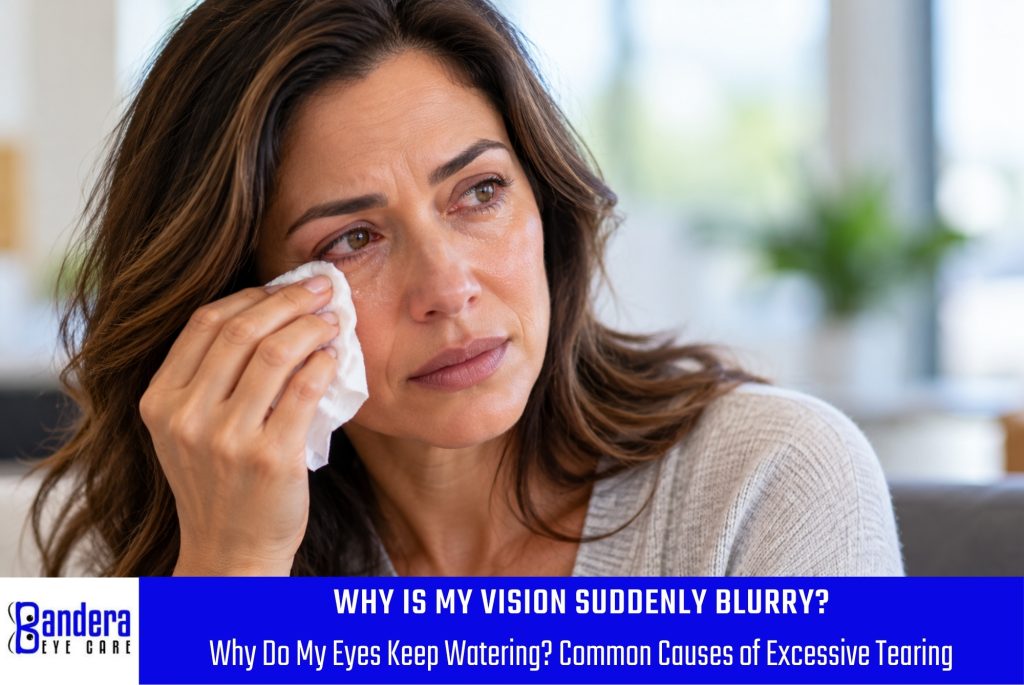
Watery eyes can be frustrating, especially when tears constantly run down your cheeks, interfere with your vision, or make everyday activities uncomfortable. While occasional tearing is a normal response to wind, irritants, or emotions, persistent excessive tearing may indicate an underlying eye condition.
Surprisingly, watery eyes are not always caused by producing too many tears. In some cases, the problem is dry eye disease, which can trigger reflex tearing when the eye’s surface becomes irritated.
At Bandera Eye Care in Bandera, TX, understanding the causes of excessive tearing can help patients recognize when symptoms require professional evaluation.
What Causes Excessive Eye Watering?
Excessive tearing, medically known as epiphora, occurs when tears overflow onto the face.
This can happen because the eyes produce more tears than necessary, the tears do not drain properly, or both.
Dry Eye Disease
Dry eye disease is one of the common causes of watery eyes.
When the tear film becomes unstable, the eye’s surface may become irritated. This irritation can stimulate the lacrimal glands to produce additional watery tears.
However, these reflex tears may not provide the stable lubrication necessary to relieve underlying dryness.
Seasonal Allergies
Allergic conjunctivitis can cause itching, redness, swelling, and excessive tearing.
Environmental allergens such as pollen, grasses, dust, and animal dander may trigger symptoms.
For people living in Bandera and the surrounding Texas Hill Country, seasonal allergens may contribute to recurring eye irritation.
Blocked Tear Ducts
Tears normally drain through small openings near the inner corners of the eyelids.
When the drainage system becomes narrowed or obstructed, tears may accumulate and overflow.
Blocked tear ducts can affect infants and adults, although the underlying causes may differ.
Blepharitis
Blepharitis is inflammation along the eyelid margins.
It may cause redness, crusting, burning, and watery eyes. Meibomian gland dysfunction often occurs alongside blepharitis.
Eye Infections
Viral or bacterial conjunctivitis can cause tearing, redness, irritation, and discharge.
Some infections are contagious, making proper hygiene and timely diagnosis important.
Foreign Bodies and Corneal Irritation
Dust, eyelashes, scratches, or other foreign material can stimulate excessive tear production.
Contact lens complications can also cause tearing and discomfort.
Why Do My Eyes Water When I Go Outside?
Outdoor conditions can influence tear production.
Wind Exposure
Wind increases tear evaporation and may trigger reflex tearing.
Temperature Changes
Cold air and sudden environmental changes can stimulate tearing in susceptible individuals.
Airborne Irritants
Smoke, dust, pollen, and other particles may irritate the ocular surface.
Protective eyewear can help reduce exposure during certain outdoor activities.
Can Eyelid Problems Cause Watery Eyes?
Yes. Proper eyelid positioning is essential for distributing tears and directing them toward the drainage system.
Ectropion
Ectropion occurs when the lower eyelid turns outward, potentially preventing normal tear drainage.
Entropion
Entropion occurs when the eyelid turns inward, allowing eyelashes to rub against the eye’s surface.
Both conditions may cause irritation, tearing, and other complications.
How Are Watery Eyes Diagnosed?
An eye examination may include assessment of the tear film, eyelid position, ocular surface, and tear drainage system.
Tear Film Testing
The eye doctor may evaluate tear stability and signs of dry eye disease.
Slit-Lamp Examination
A microscope allows detailed examination of the cornea, conjunctiva, and eyelids.
Tear Drainage Evaluation
If a blockage is suspected, additional testing or referral may be necessary.
What Treatments Help Excessive Tearing?
Treatment depends on the underlying cause.
Artificial tears or prescription treatments may help dry eye disease. Allergy management may involve appropriate antihistamine or anti-allergy eye drops. Eyelid hygiene may improve certain inflammatory conditions.
Tear duct obstruction or structural eyelid problems may require specialized procedures.
Because different causes can produce similar symptoms, treatment should follow an appropriate diagnosis.
When Should You See an Eye Doctor for Watery Eyes?
Schedule an evaluation if tearing persists, repeatedly interferes with vision, or is accompanied by redness, discharge, or eyelid irritation.
Seek urgent evaluation for significant eye pain, light sensitivity, reduced vision, injury, or marked swelling.
Frequently Asked Questions About Watery Eyes
Why Do My Eyes Water Even Though They Feel Dry?
Dry eye disease can cause reflex tearing when the ocular surface becomes irritated.
Can Allergies Cause Constantly Watery Eyes?
Yes. Allergic conjunctivitis commonly causes itching, redness, and tearing.
Why Does Only One Eye Keep Watering?
One-sided tearing may result from a blocked tear duct, eyelid abnormality, foreign body, or localized irritation.
Can Watery Eyes Cause Blurry Vision?
Yes. Excess tears and tear-film instability can temporarily interfere with clear vision.
Are Watery Eyes a Sign of Infection?
They can be, especially when accompanied by redness, discharge, or irritation.
Can Screen Time Cause Watery Eyes?
Yes. Reduced blinking during screen use can contribute to dry eye symptoms and reflex tearing.
Do Watery Eyes Require Surgery?
Most causes do not require surgery. However, certain tear drainage or eyelid abnormalities may benefit from surgical treatment.
When Is Excessive Tearing Serious?
Tearing accompanied by pain, significant redness, light sensitivity, or decreased vision requires prompt medical assessment.
Contact Information
If watery eyes are affecting your comfort or vision, Bandera Eye Care can help evaluate possible causes and recommend appropriate next steps.
Bandera Eye Care 1136 Main Street Bandera, TX 78003 Phone: (830) 850-0628 Website: banderaeyecare.com