
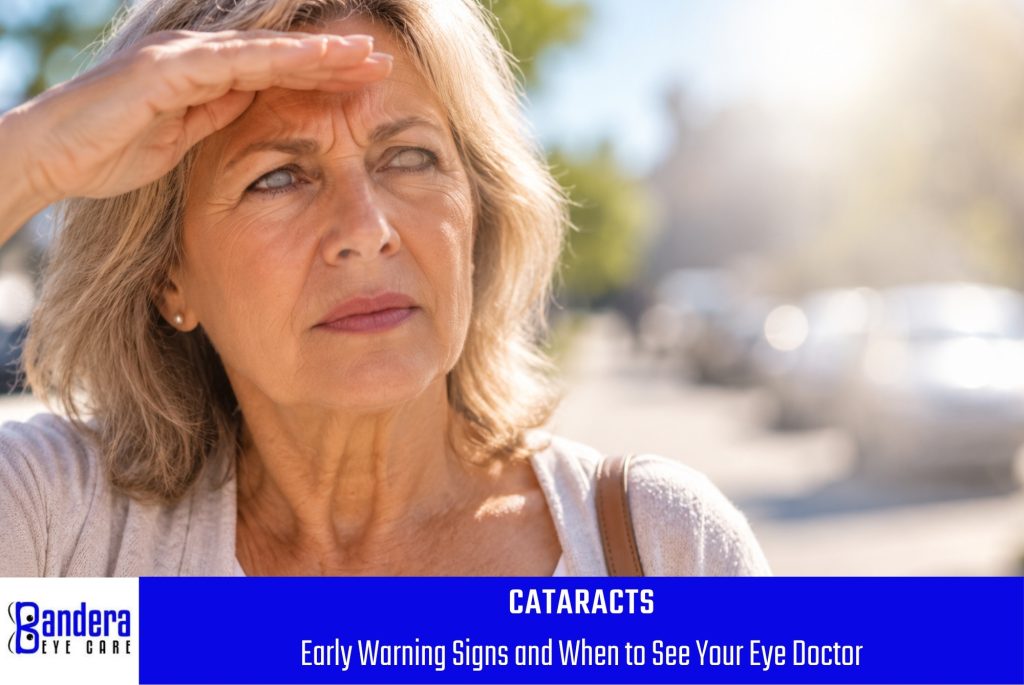
Have you noticed that your vision seems cloudy, headlights produce more glare, or colors no longer appear as vibrant as they once did?
These changes may be early signs of cataracts, a common age-related eye condition involving clouding of the eye’s natural lens.
Cataracts usually develop gradually, and many patients initially attribute the symptoms to aging or changes in their glasses prescription.
At Bandera Eye Care in Bandera, TX, understanding cataract symptoms can help patients recognize when an eye examination is necessary.
What Are Cataracts?
A cataract forms when proteins and other components within the eye’s natural lens undergo changes that reduce its transparency.
The lens normally focuses light onto the retina, allowing clear vision.
As clouding develops, light becomes scattered or blocked, reducing image clarity.
What Causes Cataracts?
Natural Aging
Age-related changes in lens proteins are the most common cause of cataracts.
Ultraviolet Radiation
Long-term exposure to ultraviolet radiation is associated with increased cataract risk.
Diabetes
People with diabetes have a greater likelihood of developing cataracts and may develop them at younger ages.
Smoking
Smoking contributes to oxidative stress and is associated with increased cataract risk.
Eye Injuries and Medications
Previous eye trauma and prolonged use of certain corticosteroid medications can contribute to cataract development.
What Are the Early Warning Signs of Cataracts?
Cloudy or Hazy Vision
Objects may appear less sharp, as though viewed through a foggy window.
Increased Sensitivity to Glare
Sunlight, headlights, and bright indoor lighting may become uncomfortable.
Difficulty Driving at Night
Cataracts can reduce contrast sensitivity and increase halos around lights.
Faded or Yellowed Colors
Colors may gradually appear duller or warmer.
Frequent Prescription Changes
Some cataracts alter the lens’s focusing power, temporarily changing glasses requirements.
Double Vision in One Eye
Certain cataracts can cause monocular double vision or ghosting.
How Are Cataracts Diagnosed?
Visual Acuity Testing
Measures the clarity of vision at different distances.
Slit-Lamp Examination
Allows direct examination of lens clouding and other eye structures.
Dilated Eye Examination
Helps evaluate the lens and retina while checking for other conditions that may affect vision.
When Do Cataracts Need Treatment?
Not every cataract requires immediate surgery.
Early symptoms may be managed with updated glasses, improved lighting, glare reduction, or other practical adjustments.
When Is Cataract Surgery Recommended?
Cataract surgery is generally considered when lens clouding interferes with important daily activities or when removal is necessary for another medical reason.
The decision depends on functional vision, individual goals, examination findings, and overall eye health.
What Happens During Cataract Surgery?
Cataract surgery typically involves removing the cloudy natural lens and replacing it with an artificial intraocular lens.
Types of Intraocular Lenses
Available options may include monofocal, toric, and presbyopia-correcting lenses.
Each has different optical characteristics and potential tradeoffs.
Recovery After Surgery
Many patients notice visual improvement within days, although complete healing takes longer.
Postoperative eye drops, activity instructions, and follow-up appointments are important.
Cataract surgery is generally safe and effective, but complications can occur and should be discussed with the surgeon.
Can Cataracts Be Prevented?
Age-related cataracts cannot always be prevented.
However, wearing UV-protective sunglasses, avoiding smoking, managing diabetes, and maintaining regular eye examinations may help support long-term eye health.
Frequently Asked Questions About Cataracts
At What Age Do Cataracts Usually Develop?
Cataracts become more common with age, especially after 60, but they can develop earlier.
Can Cataracts Cause Blindness?
Advanced untreated cataracts can cause severe vision impairment. Cataract-related vision loss is often treatable with surgery when the rest of the eye is healthy.
Can Glasses Correct Cataracts?
Glasses may improve vision in early stages but cannot remove lens clouding.
Do Cataracts Affect Both Eyes?
They frequently develop in both eyes, although one eye may be more affected.
Is Cataract Surgery Painful?
The procedure is typically performed with local anesthesia and is usually associated with minimal discomfort.
Can Cataracts Grow Back After Surgery?
The removed natural lens cannot regrow. However, clouding of the lens capsule can develop later and may be treated with a laser procedure.
How Long Does a Cataract Surgery Lens Last?
Intraocular lenses are designed to remain in the eye permanently and generally do not require routine replacement.
When Should I Have My Cataracts Evaluated?
Schedule an examination when cloudy vision, glare, or difficulty with everyday activities begins affecting your quality of life.
Contact Information
If you are experiencing cloudy vision, increased glare, or other possible cataract symptoms, Bandera Eye Care can help assess your eye health and discuss appropriate next steps.
Bandera Eye Care 1136 Main Street Bandera, TX 78003 Phone: (830) 850-0628 Website: banderaeyecare.com