
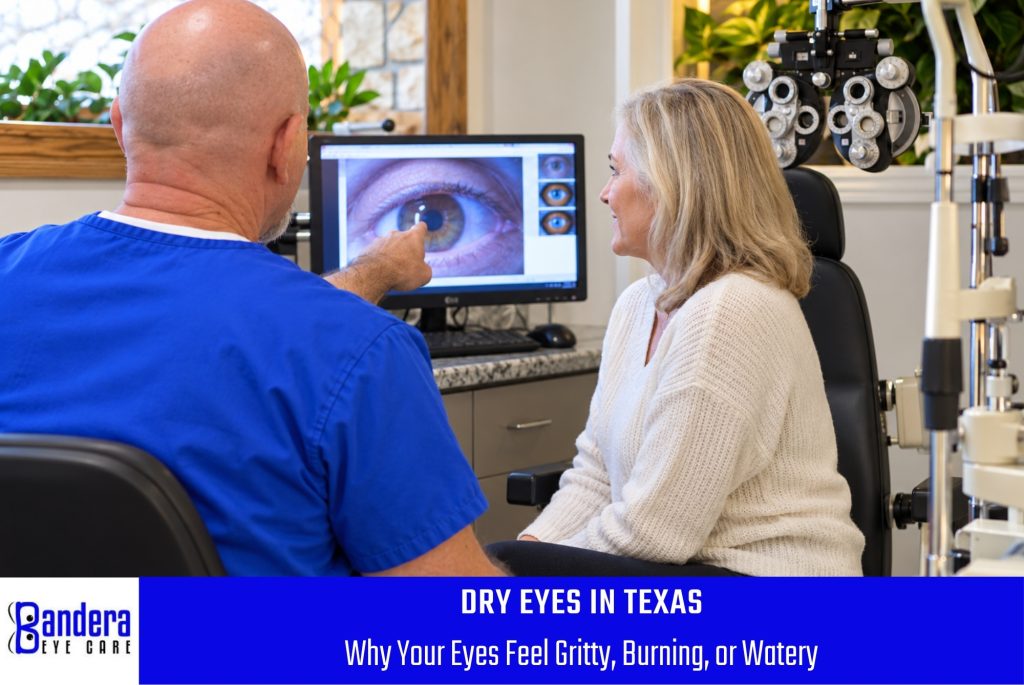
Dry, irritated eyes can make ordinary activities uncomfortable. Reading, driving, working on a computer, or spending time outdoors may become frustrating when your eyes constantly burn, sting, or feel as though something is stuck beneath your eyelids.
For residents of Bandera and surrounding Texas Hill Country communities, environmental conditions such as wind, seasonal allergens, air conditioning, and prolonged exposure to dry indoor air can make dry eye symptoms more noticeable.
At Bandera Eye Care, understanding the causes of dry eye disease is an important part of helping patients find appropriate, individualized relief.
What Is Dry Eye Disease?
Dry eye disease is a condition involving inadequate tear production, excessive tear evaporation, or instability of the tear film.
A healthy tear film protects the eye’s surface, supports comfortable blinking, and helps maintain clear vision.
When the tear film becomes unstable, inflammation and irritation may develop.
The Three Layers of the Tear Film
The tear film contains interconnected components that work together to protect the eye.
The outer lipid layer helps reduce tear evaporation. The aqueous component provides moisture and protective substances. Mucins help distribute and maintain the tear film across the eye’s surface.
Disruption of these components can contribute to dry eye symptoms.
Why Are Dry Eyes Common in Texas?
Wind and Outdoor Exposure
Wind increases airflow across the eye’s surface, potentially accelerating tear evaporation.
Outdoor activities such as walking, gardening, and recreational sports may aggravate symptoms, especially when combined with low humidity.
Air Conditioning and Indoor Climate Control
Air conditioning and heating systems can reduce indoor humidity and direct airflow toward the eyes.
People who spend long periods in climate-controlled environments may experience increased dryness.
Seasonal Allergies
Pollen, grasses, and other airborne allergens can cause itching, redness, and watering.
Allergic eye disease and dry eye disease may occur together, complicating symptoms and treatment.
Digital Screen Use
People tend to blink less frequently and may blink incompletely when concentrating on digital screens.
Reduced blinking allows tears to evaporate more quickly, potentially worsening discomfort and fluctuating vision.
What Are the Symptoms of Dry Eye Disease?
Common symptoms include burning, stinging, grittiness, redness, intermittent blurry vision, light sensitivity, and difficulty wearing contact lenses.
Some patients experience stringy mucus or a sensation of having sand in their eyes.
Why Do Dry Eyes Sometimes Water Excessively?
Excessive tearing may seem inconsistent with dry eye disease, but the two can occur together.
When the ocular surface becomes irritated, the eyes may produce reflex tears. These watery tears do not necessarily provide the stable lubrication needed to relieve chronic dryness.
However, excessive tearing may also result from allergies, infection, or blocked tear drainage pathways.
What Causes Chronic Dry Eye Disease?
Meibomian Gland Dysfunction
Meibomian glands along the eyelid margins produce oils that help prevent tear evaporation.
When these glands become obstructed or produce abnormal secretions, evaporative dry eye may develop.
Aging and Hormonal Changes
Tear production and tear-film composition can change with age. Hormonal changes may also influence tear function.
Medications and Medical Conditions
Certain antihistamines, antidepressants, and other medications may contribute to dryness.
Autoimmune conditions, including Sjögren disease, can reduce tear production.
Patients should never discontinue prescribed medication without consulting the prescribing clinician.
Contact Lens Wear
Contact lenses can affect tear-film stability and may worsen symptoms in susceptible individuals.
How Is Dry Eye Disease Diagnosed?
A comprehensive dry eye evaluation considers symptoms, medical history, medication use, eyelid health, and the condition of the ocular surface.
Tear Film Assessment
An eye doctor may evaluate tear breakup time, tear production, and corneal staining to identify tear-film abnormalities.
Eyelid and Meibomian Gland Evaluation
Examining the eyelid margins and oil glands helps identify inflammation or gland dysfunction that may contribute to symptoms.
What Treatments Help Relieve Dry Eyes?
Artificial Tears
Lubricating eye drops may provide temporary relief. Preservative-free formulations are often preferred when frequent application is necessary.
Warm Compresses and Eyelid Hygiene
Warm compresses and appropriate eyelid cleaning may help certain patients with meibomian gland dysfunction.
Prescription Dry Eye Treatments
Depending on the diagnosis, an eye doctor may recommend prescription anti-inflammatory medications or other targeted therapies.
Environmental Adjustments
Reducing direct airflow, using a humidifier when appropriate, wearing protective eyewear outdoors, and taking screen breaks may help reduce symptoms.
Treatment should address the underlying cause rather than relying exclusively on temporary lubrication.
What Happens If Dry Eye Disease Is Left Untreated?
Persistent dry eye disease can interfere with daily activities, contact lens tolerance, and visual quality.
In more severe cases, ongoing ocular surface inflammation may contribute to corneal damage or increased susceptibility to complications.
Early evaluation can help determine the severity of the condition and guide appropriate management.
Frequently Asked Questions About Dry Eyes
Why Do My Eyes Feel Gritty Even When Nothing Is in Them?
An unstable tear film or inflammation of the eye’s surface can create a foreign-body sensation. An examination can help distinguish dry eye disease from an actual foreign body or corneal injury.
Can Dry Eyes Cause Blurry Vision?
Yes. An unstable tear film can interfere with the smooth optical surface needed for clear vision, producing fluctuating blurriness.
Why Are My Eyes Dry in the Morning?
Incomplete eyelid closure during sleep, eyelid inflammation, and overnight tear-film changes may contribute to morning dryness.
Can Allergies Make Dry Eyes Worse?
Yes. Allergic inflammation and certain allergy medications may worsen dry eye symptoms.
Are Artificial Tears Safe to Use Every Day?
Many lubricating eye drops are appropriate for regular use. The best formulation and frequency depend on symptoms and individual eye health.
Does Drinking More Water Cure Dry Eyes?
Adequate hydration supports general health, but increasing water intake alone does not reliably resolve dry eye disease.
Can Dry Eyes Cause Permanent Damage?
Severe untreated dry eye disease can damage the corneal surface and potentially affect vision. Most patients benefit from timely diagnosis and appropriate management.
When Should I See an Eye Doctor for Dry Eyes?
Schedule an evaluation if symptoms persist, interfere with daily activities, or require frequent eye drops. Significant pain, light sensitivity, or decreased vision warrants prompt assessment.
Contact Information
Persistent dry eye symptoms deserve more than temporary relief. Bandera Eye Care can help evaluate potential causes of irritation and determine appropriate next steps.
Bandera Eye Care 1136 Main Street Bandera, TX 78003 Phone: (830) 850-0628 Website: banderaeyecare.com